E-mail: [email protected]
Phone: +86-572-8356001
E-mail: [email protected]
Phone: +86-572-8356001
Content
Titanium dioxide has been a cornerstone of pearlescent pigment technology for decades — as the interference coating that generates color, as the opacifier that builds coverage, and as the UV-scattering agent in sun-protection formulations. Yet more cosmetic brands are actively working to remove it from their formulations, independently of any regulatory requirement to do so. Understanding why, and how to execute that transition without sacrificing optical performance or making claims the science does not support, is what this guide covers.
The first thing to get right is scope. A significant amount of industry commentary conflates the EU's 2022 food additive ban with the regulatory status of TiO₂ in cosmetics — and they are not the same situation.
In August 2022, following Commission Regulation (EU) 2022/63, titanium dioxide (E171) was removed from the EU's approved list of food additives. The decision was based on EFSA's assessment that E171 could no longer be considered safe as a food additive, citing concerns about genotoxicity from oral ingestion and nanoparticle behavior in the gastrointestinal tract. This ban applies strictly to food use.
In cosmetics, TiO₂ remains permitted in the EU — but with specific application-dependent restrictions. According to the updated EU Cosmetics Regulation on titanium dioxide restrictions, key limits include: a maximum of 1.4% in hair aerosol sprays for consumer use, a prohibition on use in any product format that may lead to lung exposure, and requirements that only pigmentary (non-nano) TiO₂ be used in products compliant with Annex III. In the United States, the FDA classifies TiO₂ as Generally Recognized As Safe and Effective (GRASE) for sunscreen use at concentrations up to 25%, and it remains an approved colorant for cosmetic products.
The practical implication: brands reformulating away from TiO₂ in rinse-off lotions or pressed eyeshadows are doing so as a market-positioning decision, not a compliance requirement. That distinction matters enormously for how the transition should be messaged — and what claims should not be made.
Regulatory permission and consumer acceptance are different things. Several converging forces are driving TiO₂-free development in cosmetics well ahead of any mandate:
Not all product categories carry equal urgency. The risk profile — and therefore the business case for prioritizing TiO₂-free development — varies sharply by application format and use pattern. For formulators working across multiple product lines, this is the sequencing logic that makes sense.
Priority 1 — Aerosol and spray formats. This is where actual regulatory restriction already applies. Hairsprays, setting sprays, dry shampoos, and body mists with TiO₂-containing pearlescents face the strictest EU concentration caps and the most direct inhalation risk concern. Reformulation here is not precautionary — it is risk management. See also the detailed guide on TiO₂-free pearlescents for sensitive skin brightness, which covers the optical performance expectations across high-risk application formats.
Priority 2 — Eye area and sensitive zone products. Eyeliners, mascaras, eyeshadows applied near the mucous membrane, and lip products where ingestion is a realistic exposure route represent the next tier. Consumer concern here is meaningful and not purely theoretical, and TiO₂-free claims in this segment carry real purchase-decision weight.
Priority 3 — Leave-on face and body products in sensitive skin lines. Foundations, highlighters, primers, and body luminizers positioned for reactive, sensitized, or pediatric skin. The clinical justification is lower than in spray formats, but the marketing rationale is strong and growing.
Priority 4 — Rinse-off products. Shower gels, shampoos, and bath products with pearlescent effect represent the lowest-urgency category. Exposure is minimal and transient, TiO₂ remains fully permitted, and the performance trade-off of switching is hardest to justify here without a clear brand positioning reason.
Replacing TiO₂ requires understanding precisely what it is doing — because it serves two distinct functions in pearlescent pigment systems, and each function needs its own replacement strategy.
In most commercial pearlescent pigments, TiO₂ is deposited in a precise thin film on the surface of the mica substrate. The thickness of this film determines which wavelength of light undergoes constructive interference and is reflected — this is the mechanism that produces silver-white, gold, rose, and all other interference colors. The refractive index of TiO₂ (approximately 2.4–2.7 for rutile form) is high enough relative to the mica substrate (approximately 1.58) to generate strong interference contrast. This is the core optical function of TiO₂ in pearlescent pigments, and replacing it requires either a different high-refractive-index coating material or a reformulation of the substrate itself.
Separately from the interference coating on the platelet surface, TiO₂ is sometimes added to cosmetic formulations as a free-particle opacifier — to build coverage, whiten the base, or reduce the transparency of a film. This function is entirely independent of the pearlescent pigment and requires its own replacement strategy, typically involving iron oxides, zinc oxide at appropriate particle sizes, or physical film-thickness adjustments.
Formulators who conflate these two functions often try to solve both problems with one substitution and fail at both. They need to be addressed separately.
The most effective TiO₂-free pearlescent reformulations do not try to replicate TiO₂'s optical properties with a direct chemical substitute — they use substrate and pigment design to achieve the desired effect via a different physical mechanism.
The most commercially mature TiO₂-free pearlescent approach relies on synthetic mica (fluorophlogopite) substrates with surface coatings based on iron oxides, silica, or thin layers of other metal oxides that do not contain titanium. Synthetic mica's inherent purity and exceptional platelet smoothness produce a brighter, cleaner base reflection than natural mica — partially compensating for the lower refractive-index contrast achievable without TiO₂. The TiO₂-free pearlescent pigment range for cosmetic formulations built on synthetic mica substrates delivers silver-white and interference effects without any titanium dioxide in the composition.
For gold, bronze, red, and earth-tone interference colors, iron oxide coatings on mica or synthetic mica substrates can produce rich, warm pearlescent effects without TiO₂. These grades do not produce the silver-white or cold-toned interference colors achievable with TiO₂, making them most appropriate for warm-palette applications. For silver-white effects, iron oxide is not a direct substitute and requires a different approach entirely.
Bismuth oxychloride (BiOCl) offers a naturally TiO₂-free pearlescent mechanism through its own layered crystal structure, which generates pearl luster without any metal oxide coating. It produces a distinctive cool, white luster with good skin adhesion. The trade-off is density (BiOCl is heavier, leading to faster settling in liquid systems) and limited color range. Exploring natural pearlescent pigment substrates can provide TiO₂-free brightness options that are also free from synthetic mineral processing entirely — a double clean-label advantage for certain positioning strategies.
Zinc oxide is an effective TiO₂ replacement for UV filtering and whitening functions in sunscreens and foundations, but its refractive index (approximately 2.0) is too low to serve as an effective thin-film interference coating on pearlescent platelets. It works as a free-particle opacifier in a formulation, not as a substitute for TiO₂ on the pigment surface. Conflating these roles leads to formulations that are TiO₂-free on paper but optically compromised and chemically inefficient.
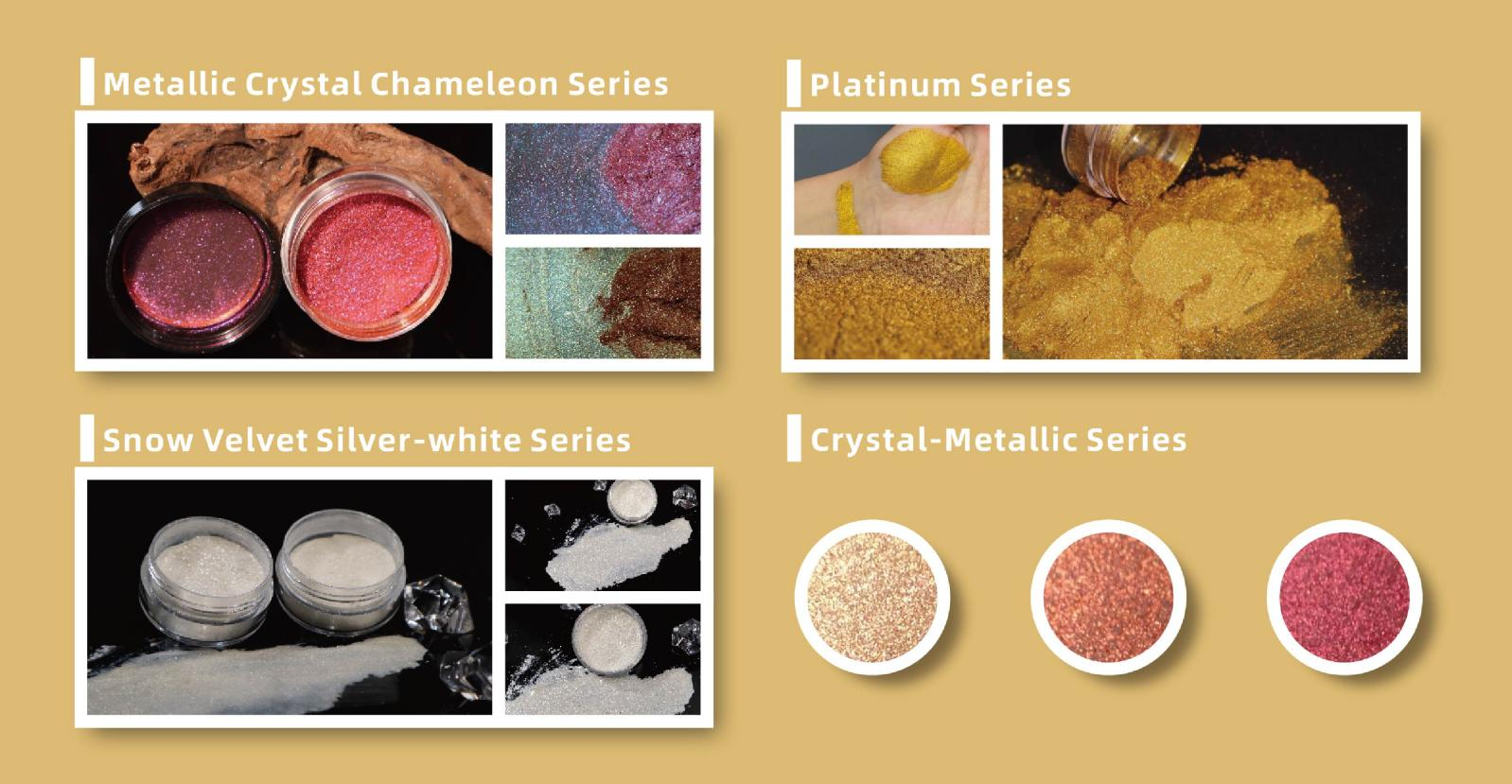
TiO₂-free pearlescent grades typically deliver lower refractive-index contrast than their TiO₂-coated equivalents, which translates to reduced brightness at equal loading and reduced opacity throughout the film. Acknowledging this upfront leads to faster, more honest product development. The specific titanium dioxide-free snow velvet silver-white pearlescent pigment represents one engineering approach to recovering brightness through substrate optimization rather than coating chemistry — but performance expectations should still be benchmarked honestly against TiO₂-containing reference grades before launch.
Three formulation strategies help close the performance gap:
Claim language around TiO₂-free products is an area where brands frequently either undersell or overclaim — and the overclaiming version creates regulatory and reputational risk.
The following framework separates what can be said from what should be avoided:
| Claim Type | Example Language | Assessment |
|---|---|---|
| Ingredient absence | "Formulated without titanium dioxide (CI 77891)" | Accurate, verifiable, neutral |
| Audience positioning | "Developed for sensitive skin — free from titanium dioxide" | Accurate if supported by dermatological testing |
| Regulatory alignment | "Formulated to meet clean ingredient standards" | Acceptable if referencing a defined standard |
| Implied safety comparison | "Without the titanium dioxide found in conventional cosmetics" | Implies conventional products are unsafe — avoid |
| Regulatory misrepresentation | "TiO₂-free because it's banned in cosmetics" | Factually incorrect — TiO₂ remains permitted in cosmetics |
| Toxicity overclaim | "No toxic TiO₂" / "TiO₂-free for your safety" | Not supported by cosmetic safety evidence; claim risk |
The most defensible and commercially effective TiO₂-free messaging leads with what the formulation is — the substrate choice, the clean ingredient philosophy, the skin type it is designed for — rather than what it is reacting against. Consumers in the clean beauty space respond to affirmative ingredient stories. Describing a luminous effect achieved through pure synthetic mica and iron oxide chemistry is a more compelling and durable narrative than a claim structured entirely around avoidance.
For brands building a comprehensive TiO₂-free effect pigment strategy across product lines, the full cosmetic-grade pearlescent pigment portfolio includes both TiO₂-containing and TiO₂-free grades across the same color families — enabling direct optical benchmarking between formulation paths before committing to a reformulation direction.

Contact Us
Mobile

 English
 Español