E-mail: [email protected]
Phone: +86-572-8356001
E-mail: [email protected]
Phone: +86-572-8356001
Content
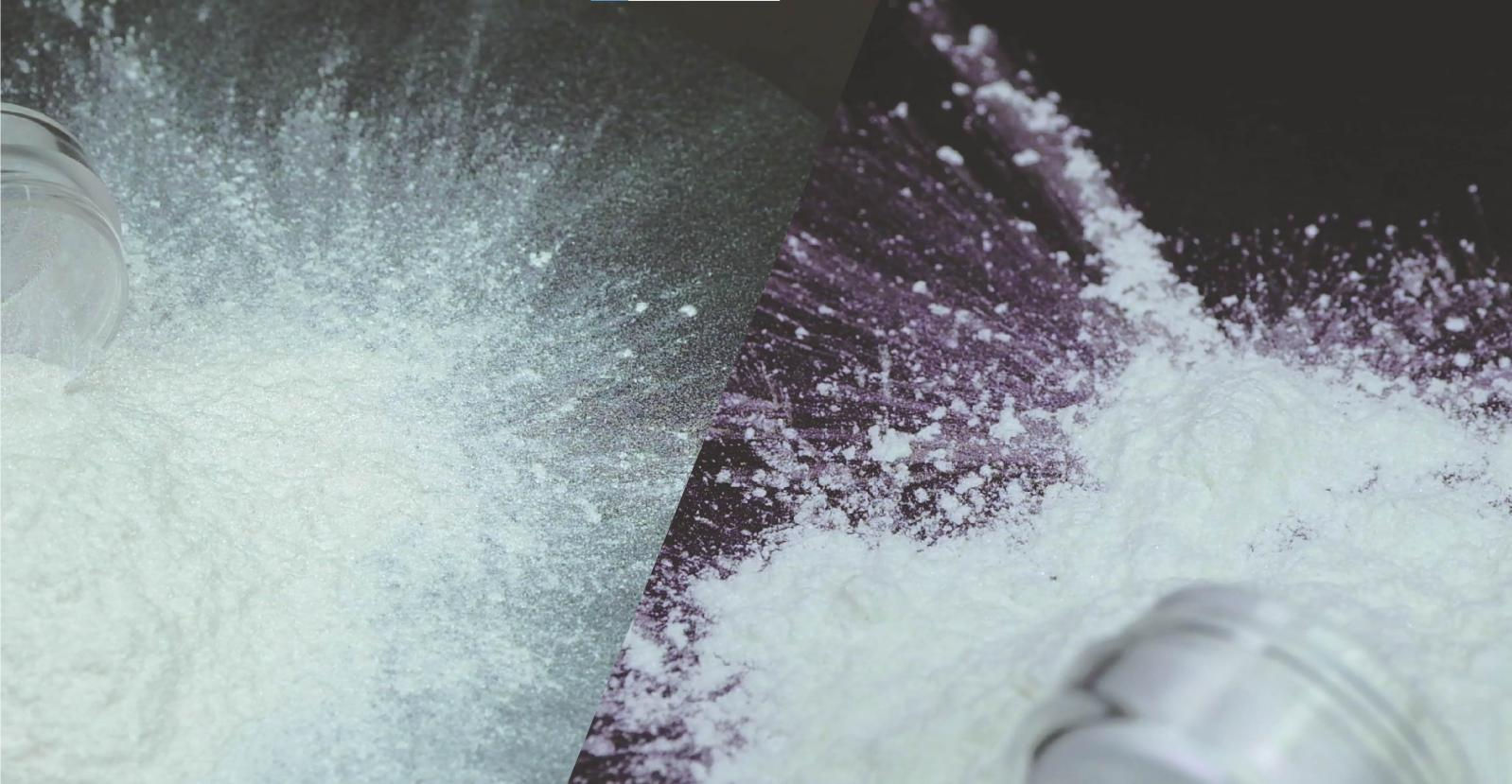
Pick up two coating samples side by side — one finished with a crystal effect pearlescent, the other with a diamond effect grade — and the difference is immediate. One reads as smooth, luminous, and internally lit. The other catches light in sharp, discrete flashes, like the surface of cut stone. Both pigments may share the same base resin, the same application method, even the same color space. The texture difference comes entirely from the pigment itself.
For formulators and product designers working within a single coating system, understanding exactly where that divergence originates — and how to control or combine it — is the difference between a finish that looks designed and one that looks accidental.
The terms "crystal effect" and "diamond effect" are not interchangeable marketing labels. They describe genuinely different optical behaviors rooted in particle geometry, substrate purity, and surface characteristics. Choosing the wrong type for a given application does not just produce a different shade — it produces a different tactile impression, a different response to viewing angle, and a different relationship with the surrounding coating film.
This distinction matters most when both effect types are available within the same product family or supplier range, as is the case with many industrial-grade pearlescent lines. The resin, solvent system, application viscosity, and curing protocol can remain identical. What changes is the pigment — and with it, the entire character of the finished surface. Getting that choice right from the specification stage saves significant reformulation effort downstream.
Both effect types derive their appearance from the same fundamental mechanism: light interference across thin, transparent platelet layers coated with metal oxides. But the way that mechanism expresses itself visually depends on two variables that crystal and diamond effects handle very differently — particle size and reflection character.
Crystal effect pearlescent pigments for industrial applications are characterized by moderate particle sizes — typically in the 10–60 micron range — combined with substrates of very high purity and uniformly smooth platelet faces. The effect produced is a continuous, soft luminosity across the surface. Light reflecting off many small, well-oriented platelets creates an overlapping interference pattern that the eye reads as an even, internally glowing sheen, rather than discrete points of brilliance. The visual impression is one of depth and translucency — the sensation that the color exists beneath the surface rather than on top of it.
Diamond effect pearlescent pigments operate at significantly larger particle sizes — commonly 60–200 microns and above. At these dimensions, individual platelets become large enough for the eye to resolve as separate reflecting surfaces. Rather than blending into a continuous sheen, each platelet catches and returns light as a distinct, high-intensity pinpoint. The aggregate of these individual reflections reads as sparkle — the same quality that makes cut gemstones appear to throw light rather than simply reflect it. Coverage is lower, but each point of reflection is far more intense.
Particle size alone does not fully explain the qualitative difference in texture. The substrate material — and the smoothness and purity of its surface — is equally decisive.
Crystal effect pigments are most commonly built on synthetic mica, a fluorophlogopite substrate grown under controlled conditions to produce platelets with exceptional flatness, chemical purity, and whiteness. The absence of natural mineral impurities means the TiO₂ or iron oxide coating deposits in a highly uniform layer, producing consistent interference color across the entire platelet face. This uniformity is what creates the clean, crystalline luminosity that gives the effect its name. There is minimal surface scatter — light enters and exits the platelet with high efficiency.
Diamond effect pigments also often use synthetic mica substrates, but at the much larger particle sizes that define this category, an additional factor comes into play: edge scattering. Larger platelets have proportionally more edge area relative to face area. Edges do not produce interference color — they scatter white light. This edge contribution, combined with the high intensity of face reflection from large platelets, creates the characteristic "cut diamond" appearance: brilliant central flash surrounded by a diffuse halo of scattered light. Some diamond effect grades use glass flake substrates, which are even smoother than mica and produce sharper, more saturated point reflections with reduced edge scatter.
Academic documentation of this substrate-surface relationship — particularly for alumina-based grades, which exhibit an exceptionally smooth surface contributing to pronounced crystal-like sparkle — is covered in the scientific review of pearlescent pigment types and their optical mechanisms published by the Encyclopedia MDPI.
When crystal and diamond effect pigments are introduced into the same base coating — identical resin, identical solvent package, identical application protocol — their behavior diverges in several practically important ways.
Crystal effect pigments, with their smaller particle size and higher face-area-to-volume ratio, provide better coverage per unit weight. Effective loading is typically 5–10% by weight of solids. Diamond effect pigments, being fewer and larger particles per gram, provide very low coverage — in some >150 micron grades, loadings as low as 0.5–2% are sufficient to produce the target sparkle intensity. Exceeding that loading causes platelets to crowd and interfere with each other, dulling the sparkle rather than intensifying it.
Both effect types require a transparent or semi-transparent coating film to function — opacity blocks the interference mechanism. Diamond effect pigments, however, are more sensitive to film transparency. Each large platelet needs unobstructed light paths across its full face area. Any light-scattering additive — pigmentary TiO₂, calcium carbonate, talc — will degrade diamond sparkle more rapidly than it degrades the continuous sheen of a crystal effect. Hiding power, when needed, should be built into the base coat beneath the effect layer rather than incorporated into the effect coat itself.
Crystal effect pigments orient more readily in thin films due to their smaller size and lower mass. Diamond effect platelets, being larger and heavier, require slower film build-up and longer open time to settle parallel to the substrate. In fast-drying systems, diamond effect grades are more prone to random orientation — and a poorly oriented large platelet scatters light diffusely rather than reflecting it brilliantly, producing a dull rather than sparkling result.
The table below summarizes the key formulation parameters that differentiate crystal and diamond effect pigments when used within the same coating system.
| Parameter | Crystal Effect | Diamond Effect |
|---|---|---|
| Typical Particle Size | 10–60 µm | 60–200+ µm |
| Visual Character | Continuous luminous sheen; soft depth | Discrete high-intensity sparkle points |
| Common Substrate | Synthetic mica (high purity) | Synthetic mica or glass flake |
| Typical Loading (wt% of solids) | 5–10% | 0.5–3% |
| Coverage / Hiding | Moderate | Very low |
| Film Transparency Sensitivity | Moderate | High — very sensitive to opacity |
| Edge Scattering | Low | Noticeable; contributes to halo effect |
| Orientation Difficulty | Lower | Higher — needs longer open time |
| Settling Risk | Moderate | High — large platelets settle faster |
| Primary Application Fit | Decorative coatings, fine automotive, cosmetic finishes | Premium automotive, high-end consumer goods, jewellery coatings |
The most sophisticated pearlescent finishes rarely rely on a single effect grade. Blending crystal and diamond effect pigments within the same coating system allows formulators to engineer finishes with both dimensional depth and focal brilliance — the continuous sheen of crystal providing a luminous backdrop against which the diamond effect's sparkle points stand out in high contrast.
The logic of the blend is spatial: crystal effect pigments fill the optical "background" of the film, creating the base color and luminosity, while diamond effect particles are spaced far enough apart to allow each large platelet to be individually resolved by the eye. When diamond loading is too high relative to crystal content, the large platelets crowd out the continuous sheen; when it is too low, the sparkle is lost in the noise of the background. A practical starting point is a 7:1 to 10:1 ratio by weight of crystal to diamond pigment, adjusted to the desired balance of depth versus flash.
Addition sequence matters as well. The crystal effect component should be dispersed and stabilized first, with the diamond effect grade added last under minimal shear — the large platelets of a diamond effect pigment are particularly vulnerable to fracture, and their introduction into a pre-stabilized crystal dispersion allows them to wet and orient without mechanical damage. This is equally true for diamond pearlescent pigments in cosmetic-grade systems, where the tactile sensitivity of the end application makes platelet integrity even more critical.
The decision between crystal and diamond — or a blend of both — comes down to three interacting factors: the viewing distance of the finished product, the lighting environment it will inhabit, and the transparency budget of the formulation.
Products viewed up close under direct or moving light sources — premium automotive exteriors, high-end consumer electronics housings, luxury packaging — benefit most from diamond effect or crystal-diamond blends, because the discrete sparkle points are individually perceptible and create a premium sensory impression. Products viewed at distance, under diffuse or indoor lighting, or requiring significant hiding power derive more reliable visual value from crystal effect pigments, where the continuous sheen is perceptible regardless of angle and remains effective even when the film is not perfectly transparent.
The table below maps effect type to application context as a starting reference. Both the industrial-grade pearlescent pigment portfolio and the dedicated cosmetic lines offer both effect types across a full range of interference colors, making it straightforward to evaluate matched pairs — the same color family in crystal and diamond grades — within a single development project.
| Application | Viewing Conditions | Recommended Effect | Typical Particle Size Range |
|---|---|---|---|
| Automotive OEM topcoat | Dynamic; direct sunlight; variable angle | Diamond or Crystal+Diamond blend | Crystal: 10–45 µm; Diamond: 80–150 µm |
| Industrial decorative coating (interior) | Static; diffuse indoor light | Crystal effect | 10–45 µm |
| Consumer electronics housing | Close-up; mixed light sources | Crystal+Diamond blend | Crystal: 10–30 µm; Diamond: 60–100 µm |
| Luxury packaging / cosmetic container | Close-up; point light sources | Diamond effect dominant | 80–200 µm |
| Architectural / decorative wall coating | Distance; diffuse; high coverage needed | Crystal effect | 10–60 µm |
| Cosmetic highlighter / eyeshadow | Skin-contact; variable angle | Crystal (cosmetic crystal grades) or blend | 10–45 µm crystal; 60–100 µm diamond |
The most important principle in this selection is not which effect is "better" in isolation, but which effect — or combination of effects — matches the lighting environment and viewing behavior of the end product. A diamond effect pigment in a diffuse-light, high-opacity system will not deliver its promise. A crystal effect in a premium, close-inspection context may look understated. Starting from the viewing context and working backward to pigment specification consistently produces better outcomes than starting from the pigment and hoping the application context cooperates.

Contact Us
Mobile

 English
 Español