E-mail: [email protected]
Phone: +86-572-8356001
E-mail: [email protected]
Phone: +86-572-8356001
Content
The special effect pigments market reached an estimated USD 747.40 million in 2024. That figure alone signals a sector in steady, unspectacular expansion—until you examine the divergent forecasts that follow. Depending on the source, the same market is projected to hit anywhere from USD 953 million to USD 1.57 billion by 2032. The spread is not noise; it reflects genuine disagreement over how broadly to define the category and which regional dynamics to weight most heavily.
Market Research Future casts the widest net, pegging 2024 value at USD 2.05 billion with a 5.23% CAGR through 2035. That number includes high-performance pigments often excluded from narrower studies. The difference matters because buyers sourcing pigments for automotive coatings encounter a fundamentally different supply chain than those buying for cosmetics. Data Bridge Market Research, with a more conservative scope, values 2024 at USD 747.40 million and projects a 4.3% CAGR to 2032. Meanwhile, Yahoo Finance-cited reports point to USD 1.57 billion by 2032, reflecting stronger weighting of Asia-Pacific growth.
| Research Firm | Base Year Value | Forecast Value | CAGR | Scope Notes |
|---|---|---|---|---|
| Market Research Future | USD 2.05B (2024) | USD 3.59B (2035) | 5.23% | Broad category, includes all particle sizes |
| Data Bridge MR | USD 747.40M (2024) | USD 969.20M (2032) | 4.3% | Narrower definition, core effect pigments |
| Yahoo Finance / SNS Insider | Not disclosed | USD 1,568.14M (2032) | 5.8% | APAC-heavy growth assumptions |
| MarketsandMarkets | USD 969.2M (2022) | Not disclosed | 5.3% | 2017 study, legacy reference point |
Discrepancies stem from three factors: whether metallic pigments are counted separately, how much weight is given to the plastics segment, and whether the analysis includes only pearlescent and interference types or the full high-performance pigment universe. For procurement professionals, the safe assumption is that core special effect pigments—pearlescent, interference, and metallic flake—are growing at roughly 4.5% to 5.5% annually. The wider high-performance segment pushes closer to 5.8%.
Not all special effect pigments are interchangeable. Their optical mechanism, substrate, and cost structure divide them into four primary categories. Metallic pigments—primarily aluminum, copper, and zinc flakes—command the largest volume share due to their use in automotive basecoats and industrial coatings. They deliver high opacity and a reflective sheen, but lack the color-travel effects that define the higher-value segments.
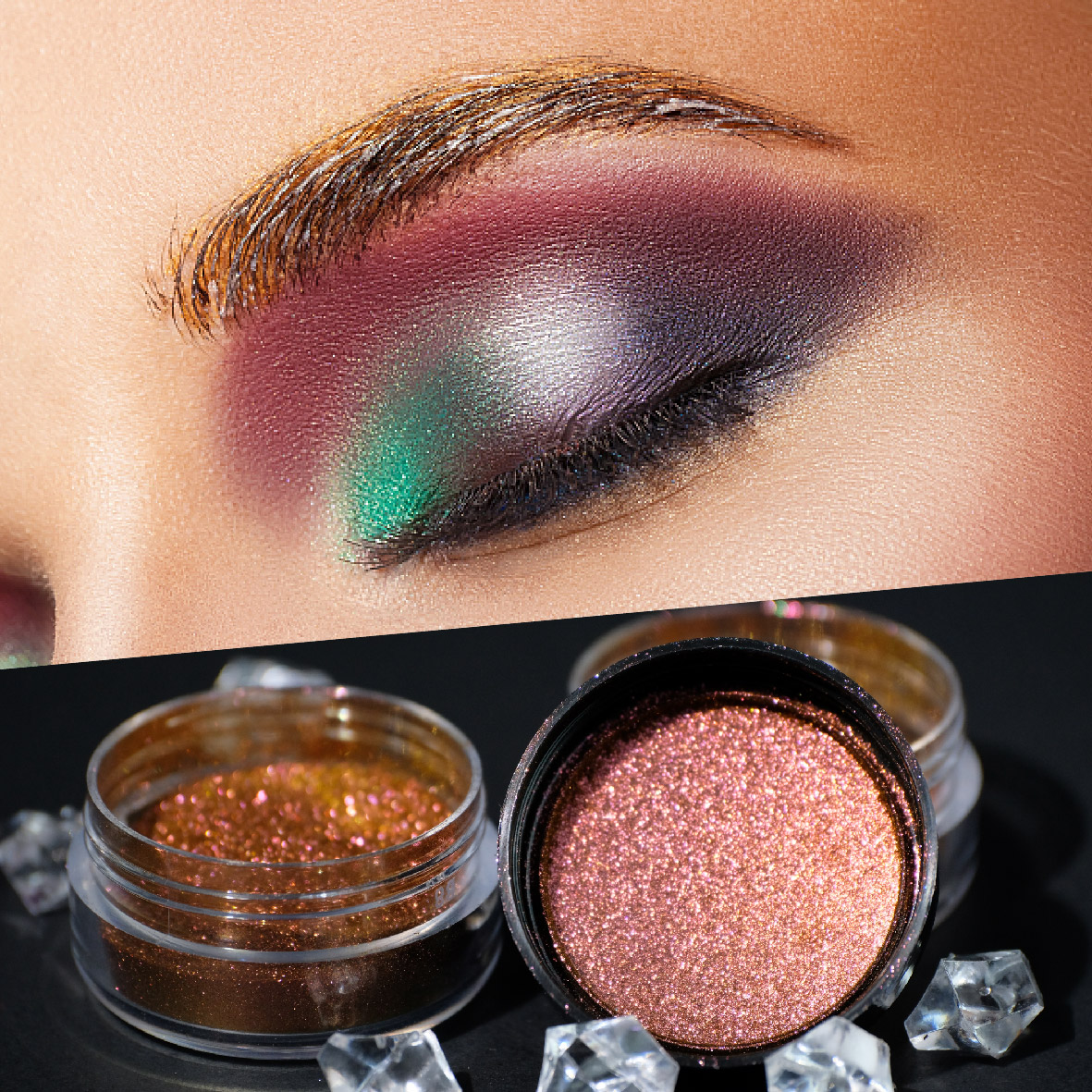
Pearlescent pigments, built on mica substrates coated with titanium dioxide or iron oxide, occupy the mid-tier in both price and performance. They produce a soft luster that shifts from white to colored reflection depending on coating thickness. The global pearlescent segment benefits directly from cosmetics industry demand, where regulatory constraints on synthetic dyes push formulators toward mineral-based alternatives. Interference pigments represent the premium tier. By precisely controlling TiO₂ layer thickness to match specific light wavelengths, these pigments create visible color shifts—a green-to-purple flip, for instance—that are unreproducible with conventional colorants. Flake pigments, including glass flakes and synthetic borosilicate substrates, offer the highest sparkle intensity but at the steepest price point.
| Type | Opacity | Weather Resistance | Relative Cost | Primary Applications |
|---|---|---|---|---|
| Metallic | High | Moderate | Low | Automotive, industrial coatings |
| Pearlescent | Semi-transparent | High (synthetic mica) | Medium | Cosmetics, packaging, plastics |
| Interference | Transparent | High | High | Premium cosmetics, luxury packaging |
| Flake (glass/borosilicate) | Transparent | Very high | Very high | High-end automotive, specialty coatings |
The substrate choice increasingly defines competitive positioning. Natural mica remains cheaper but carries supply chain risks tied to mining regions. Synthetic mica—fluorophlogopite—offers consistent whiteness, zero trace heavy metals, and higher purity, making it the preferred base for cosmetic-grade interference pigments. Manufacturers with in-house synthetic mica production control both cost and quality in ways that natural-mica-dependent competitors cannot replicate. For deeper insight into how substrate selection drives performance, crystal pearlescent pigments demonstrate the optical clarity achievable with high-purity synthetic bases.
Automotive remains the single largest end-use segment for special effect pigments by revenue. OEM basecoats and refinish systems demand pigments with verified weather resistance—typically 2,000+ hours of QUV accelerated weathering with Delta E below 2.0. The shift toward electric vehicles has intensified this demand. EV designers use pearlescent and interference finishes to signal technological sophistication, and matte-effect pearlescent pigments are now specified on models where high-gloss was once the default.
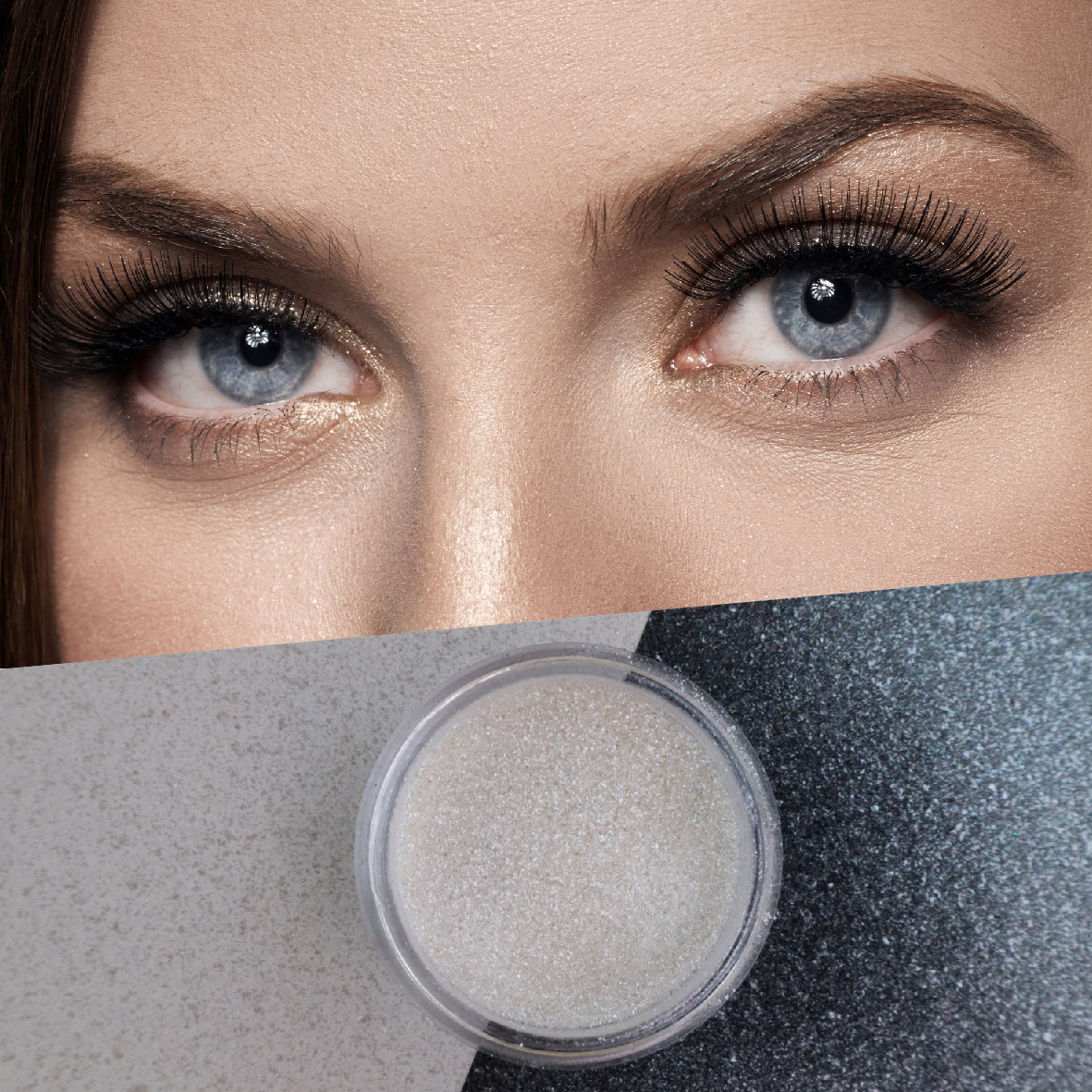
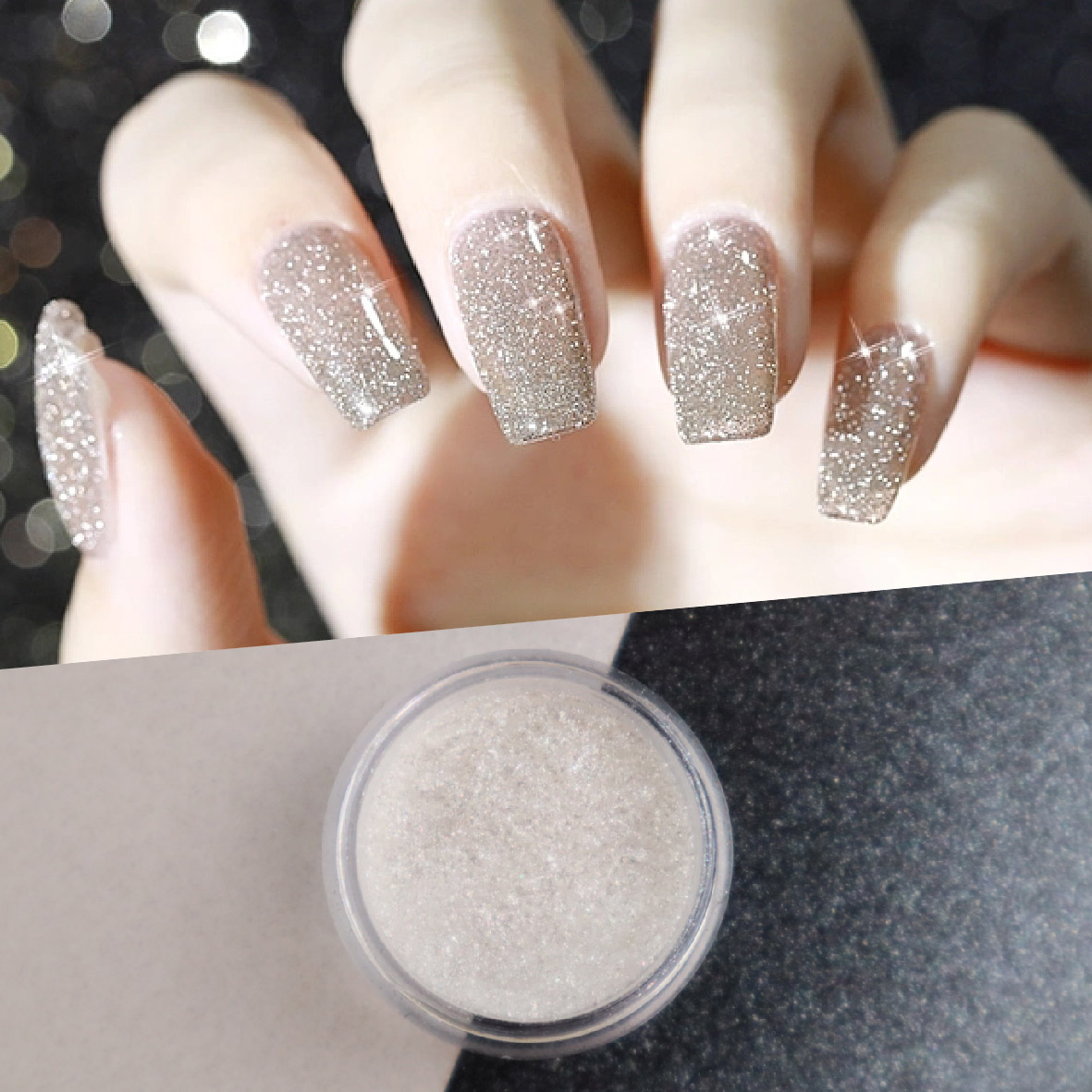
The cosmetics segment is the fastest-growing application for pearlescent and interference pigments. CAGR estimates for cosmetic-grade effect pigments range from 5.8% to 6.2% in Asia-Pacific markets specifically. Eye shadows, lip products, nail lacquers, and pressed powders all use micronized pearlescent pigments. The regulatory environment shapes formulation choices decisively: FDA 21 CFR Part 73 lists approved color additives, and EU Regulation 1223/2009 restricts heavy metal migration limits. This regulatory pressure directly benefits synthetic mica-based pigments and non-PET glitter alternatives, which carry none of the microplastic liabilities facing conventional plastic glitters. Products built on diamond pearlescent pigment substrates achieve the high sparkle intensity demanded by prestige makeup brands while meeting EU microplastic bans.
Packaging applications demand pigments that survive injection molding temperatures—often above 240 degrees Celsius—without discoloration or gas fading. The growth here is driven by premiumization: spirits bottles, confectionery wrappers, and luxury rigid boxes use interference pigments to differentiate at shelf level. Plastics compounders increasingly specify encapsulated pearlescent grades that resist yellowing during multiple heat cycles, a technical requirement that separates commodity suppliers from specialty producers.
North America held the largest regional revenue share in 2024, driven by automotive OEM demand and a mature cosmetics manufacturing base. The US market benefits from consolidated coating formulators who specify special effect pigments at the Tier-1 supplier level, creating long-term supply agreements that stabilize volume. Asia-Pacific is growing faster than any other region, with cosmetics and packaging investment concentrated in China, South Korea, and India.
The divergence is structural. North American growth is incremental—repaint cycles, EV model launches, and packaging refresh cycles. Asia-Pacific growth is expansionary: rising disposable income directly increases consumption of color cosmetics, while domestic automotive brands increasingly specify effect finishes as standard rather than optional. India's pigment market alone is forecast to grow at over 6% CAGR through 2030, fueled by both domestic consumption and export-oriented masterbatch production.
| Region | Market Position | Estimated CAGR | Primary Growth Driver |
|---|---|---|---|
| North America | Largest revenue share | 4.0–4.5% | Automotive OEM, consumer electronics |
| Europe | Steady, regulatory-driven | 4.0–4.3% | REACH compliance, sustainable packaging |
| Asia-Pacific | Fastest growing | 5.5–6.2% | Cosmetics, packaging, industrial expansion |
| Middle East & Africa | Emerging | 3.5–4.0% | Construction, automotive coatings |
Supply chains are also bifurcating regionally. Chinese synthetic mica producers have scaled capacity significantly over the past five years, reducing Asia-Pacific dependence on natural mica imports. This shift carries implications for pricing stability: regions sourcing predominantly synthetic mica face less exposure to mining-related disruptions and price volatility.
Three forces are reshaping market demand. Aesthetic differentiation remains the most immediate: brands in every vertical seek finishes that cannot be replicated by competitors using standard color palettes. This drives formulators toward multi-layer interference structures and color-shifting chameleon pigments that exhibit angular color travel. A single pigment producing three visible hues at different viewing angles creates packaging or cosmetic effects that commodity pigments simply cannot match.
Sustainability has moved from marketing language to binding constraint. The European Union's restriction on intentionally added microplastics, effective in phases through 2027, directly targets conventional PET-based glitter pigments. Cosmetic brands and coating formulators are reformulating with non-PET alternatives—synthetic mica flakes, borosilicate glass, and biodegradable substrates. This regulatory shift creates a measurable cost differential: non-PET pearlescent pigments currently command a 15–25% price premium over PET-based equivalents, but that gap is narrowing as production scale increases.
Technological advances in coating uniformity and layer deposition enable effects that were commercially unviable a decade ago. Atomic layer deposition (ALD) techniques now achieve TiO₂ thickness control within 5 nanometers, producing interference colors with batch-to-batch Delta E values below 0.5. That level of consistency matters enormously for automotive OEMs running just-in-time paint lines where color rework costs thousands per incident.
Raw material costs account for 40–55% of special effect pigment production expenses. Two inputs dominate that cost structure: mica substrate and titanium dioxide coating material. Natural mica prices fluctuated within a 15% band between 2022 and 2024, influenced by Indian mining output restrictions and sporadic supply interruptions from artisanal mining regions. Synthetic mica prices remained markedly more stable, varying less than 8% over the same period, because production depends on controlled chemical synthesis rather than extractive logistics.
Titanium dioxide presents a more acute risk. TiO₂ prices surged 22% in 2022 before partially retreating in 2023–2024 as Chinese production capacity expanded. A 10% increase in TiO₂ costs translates to an estimated 3–5% increase in pearlescent pigment production cost, given that TiO₂ constitutes 25–40% of finished pigment weight depending on coating ratio. Suppliers with backward integration into synthetic mica production insulate themselves from roughly half the raw material volatility exposure that affects natural-mica-dependent competitors.
| Risk Factor | Natural Mica | Synthetic Mica |
|---|---|---|
| Price volatility (2022–2024) | ±15% | ±8% |
| Supply disruption risk | Moderate to high (mining-dependent) | Low (chemical synthesis) |
| Heavy metal trace risk | Variable, batch-dependent | Near zero |
| Color consistency (whiteness) | 75–85 (L* value range) | 92–96 (L* value range) |
| Regulatory compliance ease | Requires batch testing | Inherently compliant |
Geopolitical factors add another layer. The Middle East conflict cited in MRFR's analysis compounds shipping cost instability for pigments moving between Asian production hubs and European or North American customers. Freight costs for container shipments from Shanghai to Rotterdam rose as much as 300% during peak disruption periods in 2023–2024, directly compressing margins on volume-grade metallic and pearlescent pigments. Buyers are responding by regionalizing supply chains where possible and qualifying second-source suppliers to mitigate single-point failure risk.
Selecting a special effect pigment requires evaluating four parameters simultaneously: weathering performance, dispersion characteristics, particle size distribution, and regulatory certification status. A pigment that performs brilliantly in a solvent-borne automotive clearcoat may fail catastrophically in an injection-molded polypropylene part at 260 degrees Celsius. The matrix matters as much as the pigment itself.
Particle size controls the visual effect. Sub-100nm particles produce a soft satin sheen; 100–200nm particles deliver balanced luster; 200–500nm particles generate pronounced sparkle; and particles above 500nm create high-intensity glitter effects suitable for specialty cosmetics and decorative coatings. Larger particles also present dispersion challenges—they require higher shear forces to wet out evenly and are more prone to settling in low-viscosity systems.
| Parameter | Cosmetic Grade | Industrial Grade | Automotive Grade |
|---|---|---|---|
| QUV Weathering | Not typically required | 500–1,000 hours | 2,000+ hours |
| Dispersion fineness | Less than 15 µm | Less than 25 µm | Less than 10 µm |
| Batch Delta E tolerance | Less than 1.0 | Less than 1.5 | Less than 0.5 |
| Key certifications | FDA, EU 1223/2009, COSMOS | REACH, RoHS | GMW, OEM-specific specs |
| Recommended particle size | 5–60 µm (eye); 20–200 µm (nail) | 10–100 µm | 5–40 µm |
For cosmetics formulators, heavy metal compliance is non-negotiable. Lead content must fall below 10 ppm, arsenic below 3 ppm, and mercury below 1 ppm for most regulated markets. Synthetic mica-based pigments achieve these thresholds by design; natural mica requires rigorous batch testing. Industrial coating buyers prioritize chemical resistance and dispersion stability in solvent systems—a pigment that settles hard in storage creates costly production delays. Automotive specifiers should demand documented QUV and xenon arc test data, not supplier assurances. A comprehensive industrial pigment range with verified technical data sheets reduces the qualification burden on buyers managing multiple specification requirements.
The special effect pigments market through 2032 will be shaped by capabilities that currently exist only at pilot scale. 3D magnetic pigments—iron oxide-coated flakes that orient in response to magnetic fields during curing—are already appearing in limited automotive special editions and luxury cosmetics packaging. Their commercial scaling depends on reducing the cost of precision application equipment, not the pigment itself.
Holographic pigments represent a parallel growth frontier. Unlike traditional interference pigments that shift between two colors, holographic structures diffract white light into visible spectral separation. Current production costs limit adoption to high-value cosmetics and security printing, but capacity investment in nano-imprint lithography for pigment production could bring prices down significantly by 2028–2030. Smart packaging pigments that respond to temperature, pH, or UV exposure are moving from laboratory demonstrations to pilot commercial runs, particularly in pharmaceutical and food safety applications where the color change provides tamper evidence or freshness indication.
Regulatory evolution will continue to reward suppliers who invest in non-PET and heavy-metal-free technologies. The microplastic restrictions starting in Europe will almost certainly expand to other jurisdictions. Forward-integrated manufacturers with synthetic mica capacity and proven non-PET glitter portfolios are positioned to capture the reformulation wave rather than react to it. The market is not simply growing—it is being reshaped by forces that favor technical capability over commodity scale.

Contact Us
Mobile

 English
 Español