E-mail: [email protected]
Phone: +86-572-8356001
E-mail: [email protected]
Phone: +86-572-8356001
Content
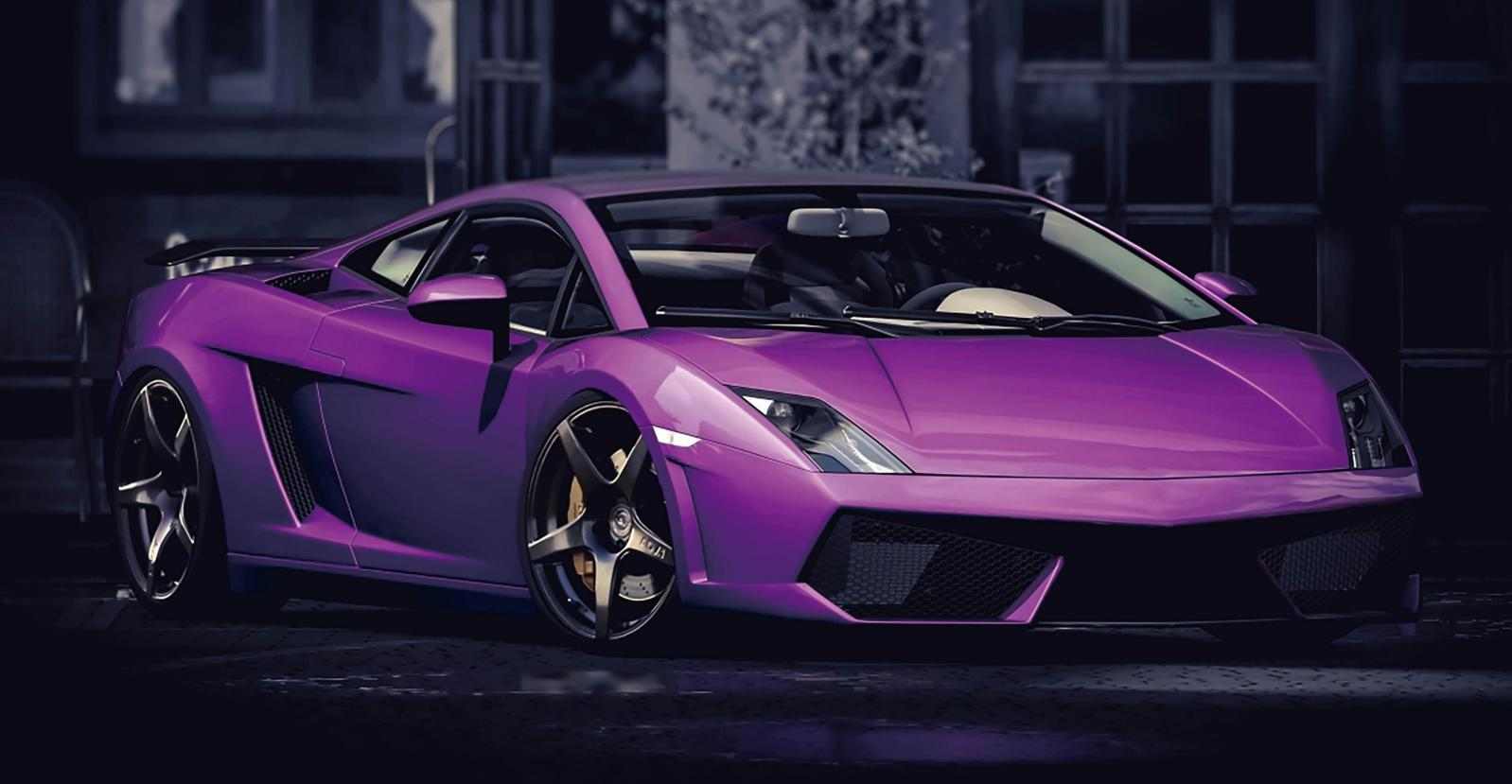
Selecting pigment powder for automotive paint is not only a color decision—it is a durability and process-stability decision. Exterior automotive coatings are routinely exposed to UV radiation, heat cycling, humidity, road salts, detergents, and occasional fuel or solvent contact. A pigment that looks excellent in the mixing cup but shifts color or loses gloss after exposure becomes a warranty and brand-risk issue.
In practical terms, most customers evaluate pigment suitability through a combination of appearance targets (hiding, chroma, flop, sparkle) and durability targets (lightfastness, weathering resistance, chemical resistance) while maintaining sprayability and stable dispersion. A good supplier should be able to support all three pillars: appearance, durability, and batch-to-batch consistency.
Automotive coatings typically combine multiple pigment families. Solid-color pigments create the fundamental hue and hiding power; effect pigments create sparkle, luster, and angle-dependent color travel. In coatings, pigments are insoluble particles that must remain stably dispersed—this is why dispersion quality directly impacts color strength, gloss, and long-term stability.
| Pigment powder type | Primary value in automotive paint | Typical risks to manage | Best practice check |
|---|---|---|---|
| Inorganic color pigments (e.g., iron oxides, TiO₂) | High stability, strong opacity, reliable weathering | Can reduce chroma; density can promote settling | Sedimentation and re-dispersion testing |
| Organic / high-performance organic pigments | Clean, vivid hues; strong tinting for bright colors | Dispersion sensitivity; some grades can show bleed or fade if misapplied | Accelerated lightfastness and solvent resistance in your resin system |
| Metallic pigments (e.g., aluminum flakes) | Metallic flop, brightness, and “sparkle” in basecoat | Orientation defects, mottling, edge mapping, filtration sensitivity | Spray-out panels across multiple gun settings |
| Pearlescent / interference pigments (mica-based effect pigments) | Pearl luster, depth, multi-angle color effects | Particle-size trade-offs: coverage vs sparkle; shear sensitivity | Particle size selection matched to film build and clearcoat transparency |
For customers targeting premium exterior finishes, weather-resistant effect pigments (especially pearlescent systems) often deliver a strong differentiation—provided they are engineered for durability rather than only visual impact. This is where specifying the right surface treatment and particle-size distribution becomes critical.
“Weather resistance” is a combined outcome: color change (fading or yellowing), gloss loss, chalking, microcracking, and sometimes loss of adhesion after prolonged UV + moisture exposure. The correct test method depends on whether you need a fast screen or a more realistic sunlight simulation.
Two widely referenced approaches are fluorescent UV exposure (often used for comparative screening) and xenon arc exposure (often used when a closer match to natural sunlight is required). Many programs use both: fluorescent UV to quickly compare formulations and xenon arc to validate appearance retention under broader-spectrum exposure.
Important interpretation note: accelerated tests provide approximations. Always compare against a control panel (current approved pigment system) and run multiple replicates when decisions are high-impact.
For pearlescent pigment powder used in automotive paint, particle size is not a minor spec—it drives the visual outcome and the application window. In general, luster increases with particle size, but coverage decreases; very large particles can appear “star-like” and may demand higher film build and careful spray technique. Industry references commonly cite an optimal pearlescent distribution around 10–60 microns to balance brightness, luster, and practical coverage in coatings.
From a supplier perspective, the most effective way to support your formulation team is to offer a graded series (micro → satin → sparkle) so the appearance can be tuned without changing the full pigment chemistry. If you are evaluating our weather-resistant pearlescent options, start with the Weather Resistance Pearls Series as the application-focused entry point, then select particle size based on your finish target.
| Example grade | Particle size | Typical appearance | When to choose |
|---|---|---|---|
| Micro-grade pearl | 1–15 μm | Smooth, satin-like luster; higher coverage feel | Refined finishes, tight film build, reduced sparkle |
| Satin / fine pearl | 5–25 μm | Balanced luster; good uniformity | General-purpose BC pearl effects with stable appearance |
| Medium pearl | 10–40 μm | Clear pearl luster with noticeable effect | When you need stronger pearl impact without “glitter” |
| Sparkle pearl | 10–125 μm | High sparkle potential; more “point” reflection | Custom finishes, higher film builds, careful filtration planning |
| Super sparkle pearl | 40–200 μm | Very strong sparkle; lowest coverage, most “star-like” | Show-car looks; verify spray equipment and panel uniformity |
If you want to see a representative set of weather-resistant pearlescent pigment codes and size ranges (including micro to super-sparkle options), refer to our weather resistance pearlescent pigment range. For exterior programs, we also recommend confirming the durability strategy (for example, non-chrome treatments and humidity-resistance design) before locking a particle size.
Most appearance failures that are blamed on “pigment quality” are actually dispersion or compatibility failures: incomplete wetting, residual agglomerates, uncontrolled flocculation, or poor stabilization in the binder. High-brilliance coatings typically depend on complete dispersion, optimized particle size, and long-term stabilization of the pigment in the formulation.
When sourcing pigment powder for automotive paint, the “best-looking sample” is rarely the safest choice by itself. Automotive programs depend on reproducibility across batches and across production sites. For effect pigments, small shifts in particle-size distribution or surface treatment can create visible differences in sparkle density, flop, and shade.
As a reference example, our weather-resistant pearlescent pigment platform is designed to combine high chroma and sparkle with a durability-focused surface strategy, including non-chrome approaches to help improve humidity resistance and long-term stability. The intent is straightforward: maintain effect quality after exposure, not only at day-zero appearance.
Not every paint layer needs the highest weathering specification. However, weather-resistant pearlescent pigment powder is often justified in these common cases:
A clear brief reduces development cycles. Specify your binder system, whether the pearl will be used in basecoat or midcoat, your target film build, and your weathering validation approach (including control panels). If your program requires a defined family of pearl sizes, request at least three sizes that bracket your target: for example 5–25 μm, 10–40 μm, and a sparkle option where appropriate.
If you need an application-oriented overview of our options for automotive coatings, start with the Weather Resistance Pearls Series. When you have a defined sparkle/coverage target, align it to particle size and confirm filtration and sprayability in your own line conditions.
Bottom line: the right pigment powder for automotive paint is the one that keeps its intended appearance after exposure, stays stable in your formulation, and can be reproduced reliably at scale.

Contact Us
Mobile

 English
 Español