E-mail: [email protected]
Phone: +86-572-8356001
E-mail: [email protected]
Phone: +86-572-8356001
Content
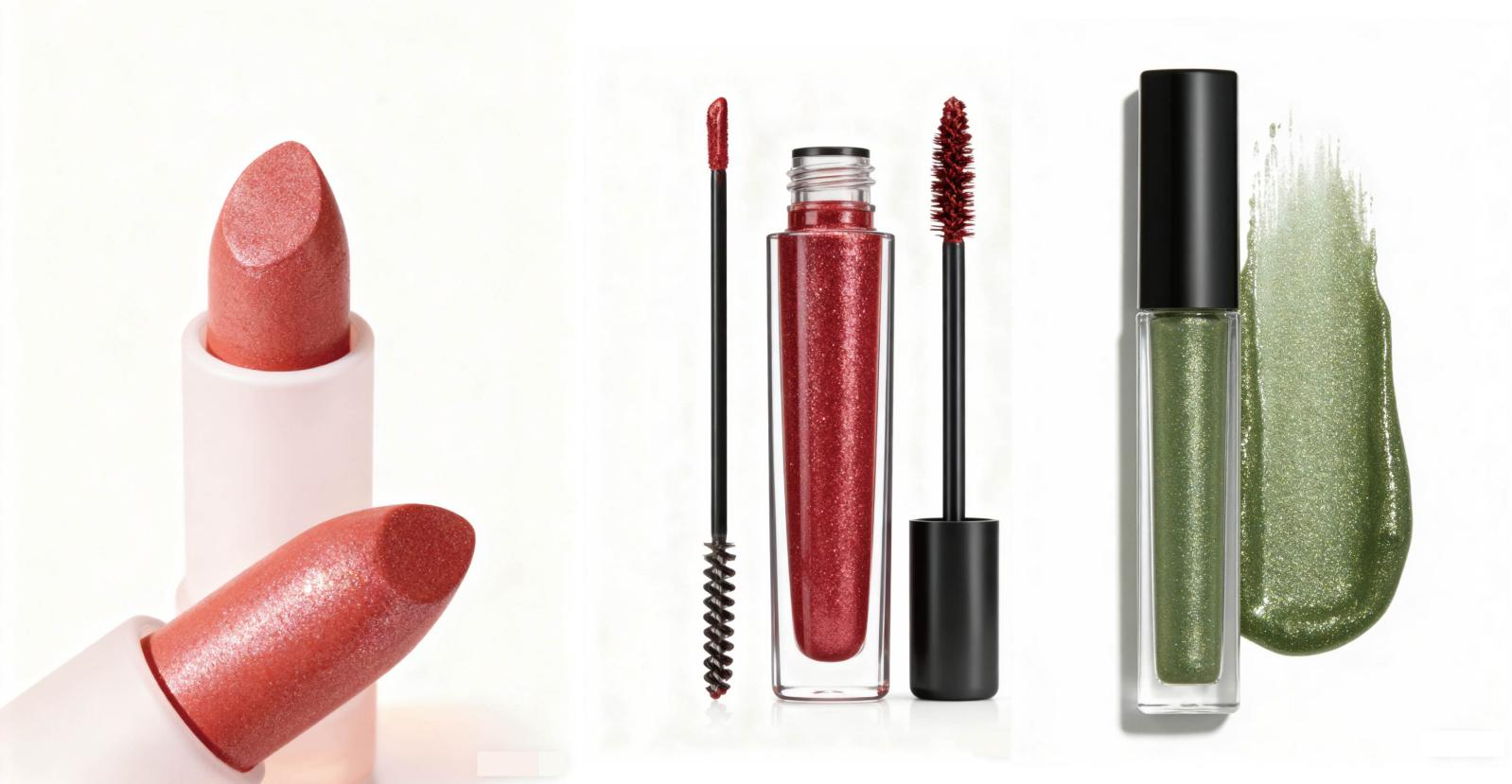
A high-performing lip gloss pigment must do more than deliver color. In an anhydrous, high-shine system, pigments influence optical clarity, sparkle uniformity, wear, and—most importantly—mouthfeel (grittiness vs. cushion). The best results come from matching pigment morphology and surface properties to your gloss base (oils, polybutene, hydrogenated polyisobutene, tackifiers, film formers).
From a manufacturer’s perspective, clarifying these targets early reduces reformulation cycles and helps you specify the correct effect pigment family (pearlescent, surface-treated, silicone-treated, or special-effect series) rather than “overloading” the formula to force the look.
Most lip gloss launches rely on a layered approach: (1) base tint, (2) shine/pearl, and (3) highlight effects. For many gloss concepts, cosmetic-grade pearlescent pigments provide the most versatile “shine architecture” because they can deliver glow without the heavy opacity that can make a gloss look flat.
If you are evaluating effect pigments specifically, start with a cosmetic-grade pearlescent pigment portfolio that offers multiple bases and surface treatments—this makes it easier to tune both sensory feel and dispersion behavior without changing the whole formula.
| Lip gloss pigment type | What it does best | Typical starting level (w/w) | Common risk | Mitigation |
|---|---|---|---|---|
| Pearlescent pigments (mica / synthetic mica-based) | Glow, shimmer, depth; “wet look” enhancement | 0.2–3.0% | Settling or streaking in low-viscosity bases | Choose appropriate particle size; improve wetting and viscosity; use surface-treated grades |
| Iron oxide / mineral colorants (for tint) | Tint control, shade matching, opacity support | 0.05–1.0% | Dullness if overused in a glossy system | Keep tint low; layer pearl for brightness; confirm color under multiple light sources |
| Special-effect pearls (e.g., interference, magnetic 3D, color-shift) | Statement finishes; visual movement | 0.3–2.5% | Texture or visual “grain” if particles are too large | Select finer grades for gloss; validate feel on-lip; optimize dispersion |
For most SKUs, you can hit a commercially strong finish using two levels: a low tint level for shade direction and a pearl level for brightness. As a starting point, many developers evaluate 0.2–1.0% for a subtle shimmer gloss, 1.0–3.0% for a visibly pearly gloss, and up to 3.0–5.0% for a more metallic look (depending on base viscosity and targeted feel).
“Gritty gloss” is rarely a formula problem alone—it is usually a pigment selection mismatch. Lip products are uniquely sensitive because the lips amplify texture perception. For a smooth feel, the pigment’s size range and plate-like geometry need to align with the base viscosity and the applicator method (doe-foot, brush, squeeze tube).
As an example of how manufacturers specify effect pigments, a magnetic special-effect pearlescent series may include shades in 10–60 μm as well as smoother “satin” options in 5–25 μm. In gloss, the 5–25 μm class is commonly preferred when you want visible effect with a cleaner feel, while 10–60 μm can be suitable when the base is thicker or when a more textured sparkle is acceptable.
Beyond size, surface treatment can materially change “slip” and adhesion. For example, a surface-treated synthetic mica system can be designed for high hydrophobicity, stronger skin affinity, and high transparency—useful for long-wear shine without relying on heavy film formers. If you are optimizing feel, review surface treatment pearlescent pigment options early in development rather than treating sensory issues as an afterthought.
Most lip gloss systems are anhydrous, so dispersion quality depends on wetting in oils and controlling agglomerates. Poor dispersion shows up as uneven shimmer bands, color specks, and rapid settling. The goal is to fully wet the pigment surface, then distribute it without breaking platelets so aggressively that you lose pearlescent “flip.”
If your development goal is a bright, high-chroma pearlescent finish with easier processing, silicone-treated pigments are often considered because the surface can be engineered for better dispersion and improved sensory properties. For example, a silicone-oil-treated pearlescent system may be positioned for better dispersion and skin care and can be applied across many mica-based pearls, which simplifies shade expansion once the base is locked. A relevant reference point is Raysoft silicone coated pearlescent pigment options when dispersion robustness is a key buyer requirement.
A lip gloss pigment can look perfect at day 1 and fail at week 4 if the system is not tested under realistic stress. As a supplier, we recommend agreeing on a simple but defensible test plan that reflects how gloss is stored and used: warm bathrooms, cold transit, repeated opening, and light exposure.
Some brands prefer TiO2-free effect pigments for sensitive-skin positioning or to align with specific market expectations. In practice, TiO2-free options may trade some brightness because titanium dioxide has a high refractive index; alternative mineral systems can appear less bright but still deliver elegant glow when paired with the right base and shade design. If TiO2-free is a requirement for your lip gloss pigment brief, evaluate TiO2-free pearlescent pigment choices early so you can tune the final brilliance through pigment selection rather than increasing loading.
Finally, because lip products sit close to ingestion pathways, buyers typically ask for cosmetic-grade documentation and consistent batch-to-batch performance. Avoid substituting industrial-grade effects into lip gloss without clear documentation and risk assessment.
When you source a lip gloss pigment from a dedicated manufacturer, the value is not only the shade library—it is the ability to control batch consistency, offer application guidance, and provide surface treatment options that reduce your processing risk. This is especially important when you are scaling from lab to production, where dispersion energy and mixing time change.
In our category portfolio, cosmetic pigments are used across many product types—including glosses—so we design effect pigments with performance and stability in mind. If you want to review available pearlescent families (including surface-treated and specialty effects) for lip applications, start with our cosmetic-grade pearlescent pigment category and shortlist candidates by particle size and surface treatment.
Key takeaway: the fastest path to a successful lip gloss pigment is to choose the right particle size and surface treatment first, then adjust viscosity and dispersion method—rather than trying to “fix” feel or settling with higher pigment loading.

Contact Us
Mobile

 English
 Español