E-mail: [email protected]
Phone: +86-572-8356001
E-mail: [email protected]
Phone: +86-572-8356001
Content
A standard epoxy paint can protect a steel beam for a few years. A high-performance coating system can extend that to a decade or more with minimal maintenance. The difference lies in quantifiable performance thresholds, not vague claims of durability.
High-performance industrial coatings are engineered systems that meet specific ASTM, ISO, or NACE standards for corrosion resistance, adhesion, temperature endurance, and chemical tolerance. They are not defined by their resin type alone. Instead, they are defined by results: an epoxy system that withstands 3,000 hours of salt spray (ASTM B117), a polyurethane topcoat that retains gloss after 2,000 hours of QUV acceleration (ASTM G154), or a zinc-rich primer that delivers cathodic protection under immersion. Below is how these systems compare against conventional industrial paints.
| Property | Conventional Paint | High-Performance Coating |
|---|---|---|
| Salt Spray Resistance (ASTM B117) | 500–1,000 hours | 2,000–5,000+ hours |
| Continuous Service Temperature | Up to 120°C dry | -40°C to 200°C dry, intermittent higher |
| Pull-Off Adhesion (ASTM D4541) | 2–5 MPa | Typically 10–20 MPa on prepared steel |
| Chemical Resistance | Limited to mild acids/alkalis | Resists concentrated acids, solvents, and alkalis |
| Dry Film Thickness Range | 50–100 microns per coat | 75–300 microns per coat, multi-layer systems |
These numbers are the only reliable way to judge coating performance. They allow engineers to select a system based on actual exposure conditions rather than marketing brochures. A chemical plant with frequent sulfuric acid spills needs a coating that passes a 30-day immersion test at pH 1, not just a “high-performance” label. That same rigor applies to heat, impact, and UV exposure.
No single resin chemistry dominates every industrial environment. Epoxy, polyurethane, zinc-rich, and acrylic systems each solve a distinct set of problems. Understanding their molecular strengths lets you match the right coating to the substrate and the threat.
| Coating Type | Core Chemistry | Best For | Typical Temp Range | VOC (g/L, solvent-borne) | Typical DFT (microns) |
|---|---|---|---|---|---|
| Epoxy | Amine- or polyamide-cured epoxy resin | Chemical immersion, tank linings, primers on steel | Up to 120°C dry | 250–340 | 125–500 per coat |
| Polyurethane (aliphatic) | Isocyanate with acrylic or polyester polyol | Exterior topcoats, UV resistance, color stability | -40°C to 150°C | 200–300 | 50–125 per coat |
| Zinc-Rich (inorganic/organic) | High zinc dust loading in silicate or epoxy binder | Sacrificial protection on steel, offshore/marine | Up to 400°C (inorganic) | 250–350 | 65–125 per coat |
| Acrylic (solvent/water) | Thermoplastic acrylic resins | Fast drying, shop priming, moderate exterior durability | -30°C to 80°C | 100–300 | 25–75 per coat |
Epoxies dominate chemical-resistant linings because the cross-linked structure resists hydrolysis and swelling. But they chalk and yellow under UV, so an aliphatic polyurethane topcoat is often mandatory for outdoor structures. Zinc-rich primers are the first line of defense on structural steel when cathodic protection is non-negotiable. For high-tension bolts or fast-drying repairs, acrylics offer practical application speed, albeit with lower barrier properties. A common combination is an epoxy zinc-rich primer, an epoxy intermediate, and a polyurethane finish—this system can exceed 3,000 hours of salt spray when applied correctly.
Spec sheets are filled with hour ratings, but those numbers are useless without understanding the test method and its limitations. Salt spray (ASTM B117) is a screening tool, not a perfect simulation of real-world corrosion. Still, it provides a reliable comparative baseline when you know what to look for.
A single-coat epoxy might show 1,000 hours before scribe creep exceeds 2 mm. A full three-coat system with zinc primer, epoxy midcoat, and polyurethane topcoat commonly reaches 3,000–4,500 hours with scribe creep under 1 mm. In QUV testing (ASTM G154), an unshielded epoxy yellows and loses gloss within 500 hours, while an aliphatic polyurethane retains over 80% gloss at 2,000 hours. Taber abrasion (ASTM D4060) values below 100 mg weight loss per 1,000 cycles indicate high wear resistance for flooring and chute linings.
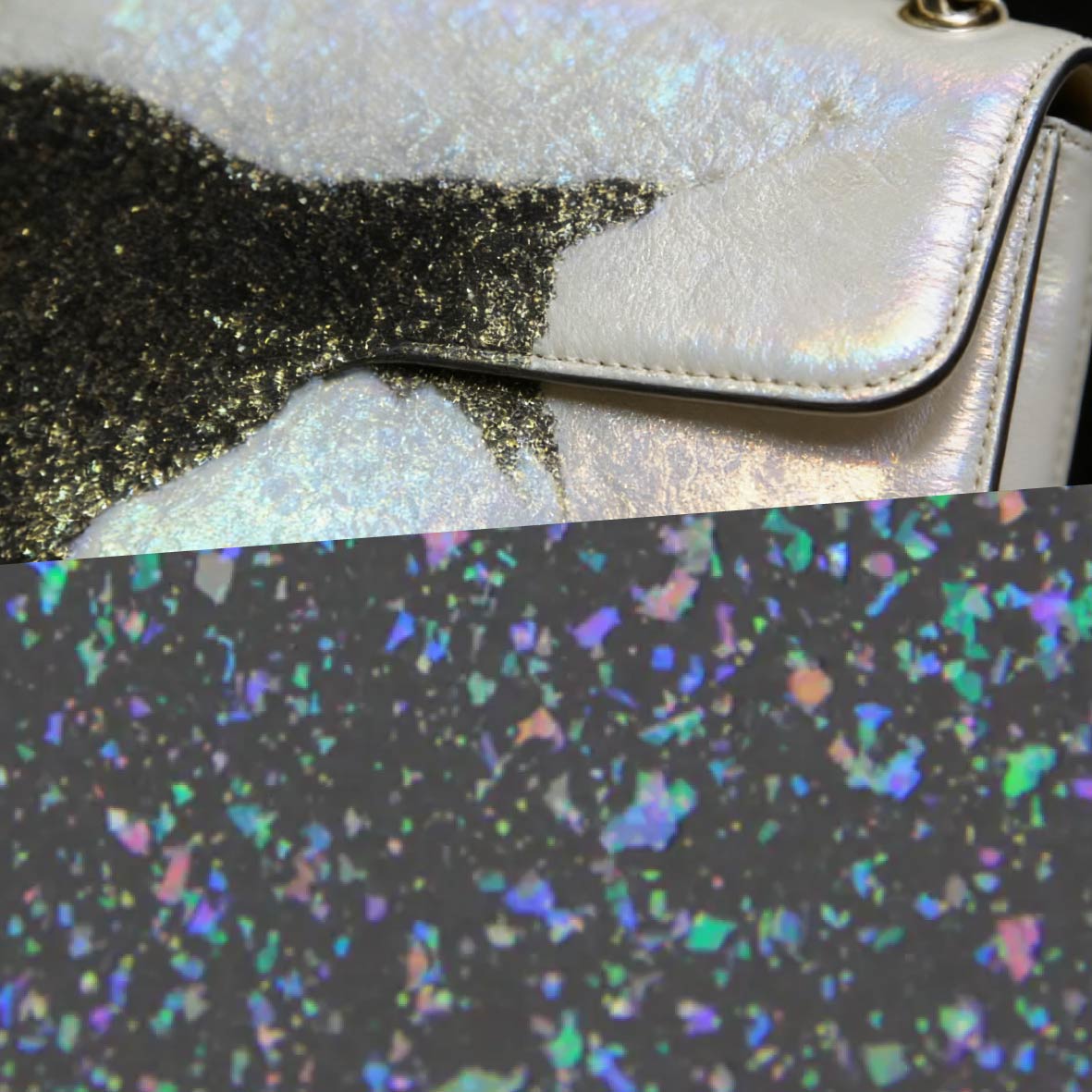
When aesthetics matter—as in machinery enclosures or branded equipment—light-stable topcoats are non-negotiable. Adding specialty pigments can further improve UV durability. Interference pearlescent pigments reflect UV wavelengths while delivering depth and color travel, reducing the thermal load on the underlying film. This is not just visual; it measurably extends recoat intervals in sunny installation sites.
Always request test reports that state the full coating system, substrate, surface preparation, and film thickness. A salt spray number without those details is marketing padding.
Every substrate demands a specific anchor profile, and every environment accelerates failure in a different way. Carbon steel in a marine splash zone needs a tri-coat system with zinc primer. Concrete in a secondary containment area needs a flexible epoxy that bridges cracks. The matrix below simplifies the first pass of selection.
| Substrate & Environment | Recommended System | Surface Preparation | Expected Service Life |
|---|---|---|---|
| Carbon steel, exterior (C4/C5) | Zinc-rich epoxy primer + epoxy midcoat + aliphatic PU finish | Sa 2.5, profile 50–75 μm | 15–20 years to first major maintenance |
| Stainless steel, chemical processing | Epoxy phenolic or novolac epoxy | Sa 2, sweep blast for profile | 10–15 years |
| Concrete, acid spillage | 100% solids epoxy novolac, 500 μm DFT | CSP 3–5, patched and primed | 8–12 years |
| Plastic/FRP, outdoor weathering | Adhesion-promoted aliphatic PU, elastomeric acrylic | Solvent wipe, light abrasion | 7–10 years |
| Steel, high-temperature (200°C+) | Inorganic zinc silicate | Sa 2.5, profile 25–50 μm | 10–15 years |
For immersion service in water or chemicals, a one-coat system is rarely sufficient. The Health and Safety Executive in the UK recommends a minimum of two coats for long-term immersion, while the NORSOK M-501 standard for offshore coatings specifies three coats with strict DFT tolerances. Skipping the tie-coat between an epoxy primer and polyurethane topcoat is the most common cause of intercoat delamination. Always verify recoat windows and apply the intermediate within the manufacturer’s specified time.
The finest epoxy will fail within months if applied over oil-contaminated, non-profile steel. Surface preparation accounts for 60–70% of coating performance, yet it remains the most rushed step in many projects. The standard ISO 8501-1 cleanliness grades are not optional; they are pass/fail criteria for warranty validity.
Key steps that dictate coating lifespan:
Spray application parameters like 30–40 cm gun distance and 60° angle keep overspray minimal and film build uniform. For brush-applied stripe coating on edges and welds, use a thinned version of the primer to ensure penetration into crevices. In confined spaces, solvent-based formulations demand mechanical ventilation—ignoring this leads to solvent entrapment, pinholing, and catastrophic premature failure.
Procurement departments often reject high-performance coatings because the per-liter price looks 2–3 times higher than a standard alkyd. But a 10-year lifecycle analysis flips that conclusion. When you factor in shutdown costs, surface preparation, reapplication labor, and lost production, the cheaper coating becomes the most expensive choice.
Consider a 500 m² chemical storage tank. The standard alkyd system requires maintenance every 3 years, including abrasive blasting and full recoating. The epoxy/polyurethane system demands only a light wash and local repair after 10 years. The table below highlights the numbers.
| Cost Category | Standard Alkyd System | High-Performance Epoxy/PU |
|---|---|---|
| Material cost (initial + 2 recoat cycles) | $4,200 | $5,800 |
| Surface preparation & application labor | $28,000 | $14,500 |
| Production downtime (estimated 5 days per event) | $65,000 | $0 (touch-up only) |
| Total 10-year cost | $97,200 | $20,300 |
Even excluding downtime, the labor savings alone justify the upgrade. The high-performance system delivers an ROI that simply cannot be matched by repeatedly repainting with low-cost materials. For safety-critical structures, the risk of unplanned failure—and the associated liability—makes the decision even clearer.
Regulations are reshaping industrial coatings faster than chemistry labs can reformulate. The US EPA’s AIM rules (40 CFR 59) and European Directive 2004/42/EC have driven solvent-borne VOC limits down to 250 g/L for many maintenance coatings. That has accelerated the shift to high-solids, waterborne, and 100% solids systems. At the same time, specifiers are demanding LEED v4.1 credits through low-emitting materials and reduced environmental impact.
Current trends shaping the next decade:
No coating is sustainable if it fails early. The most environmentally responsible choice is a system that lasts twice as long and requires 75% fewer repaint cycles. That principle, combined with low-VOC chemistry and safer pigment technology, defines the future of high-performance industrial coatings.

Contact Us
Mobile

 English
 Español