E-mail: [email protected]
Phone: +86-572-8356001
E-mail: [email protected]
Phone: +86-572-8356001
Content
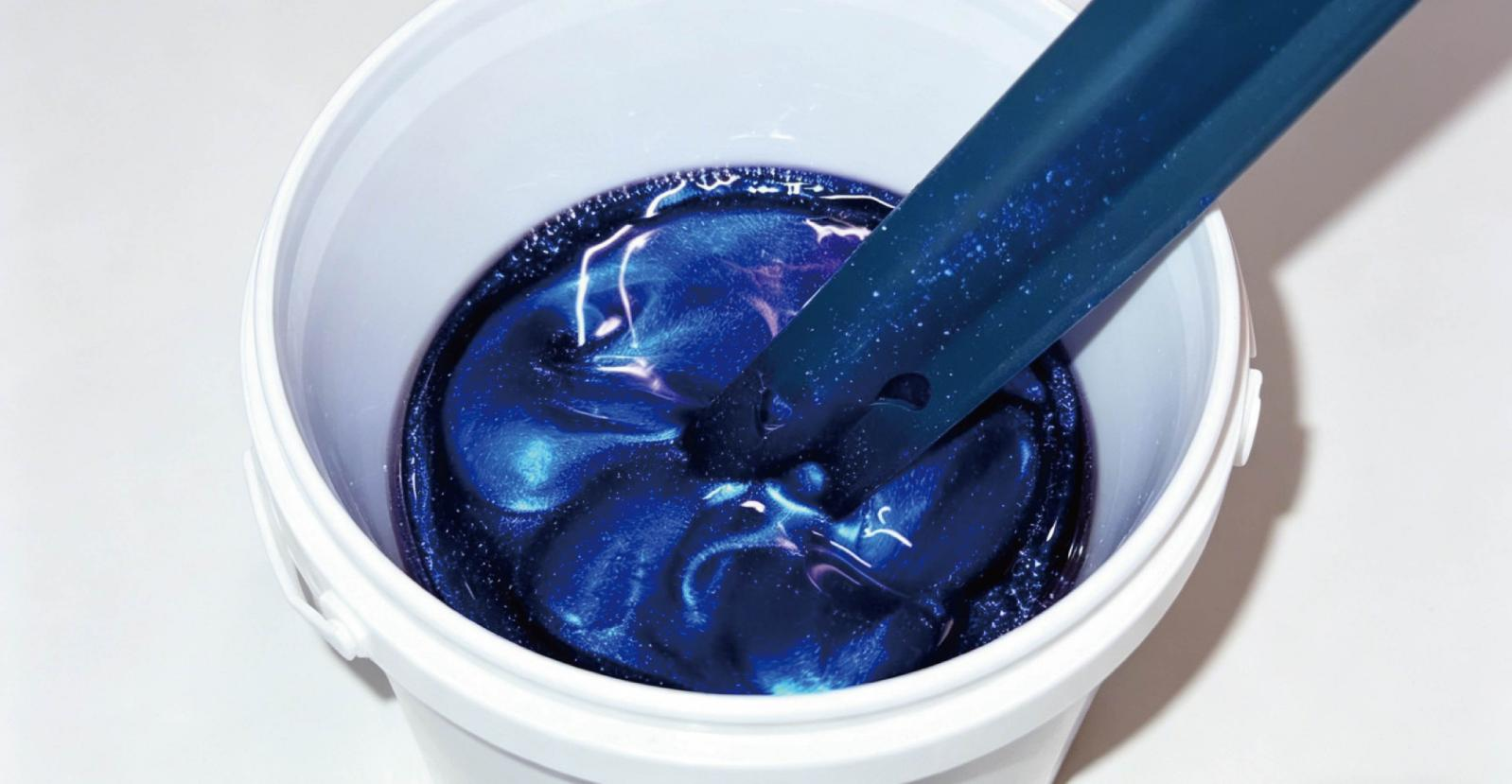
A single formulation decision — how you introduce the pigment — can make the difference between a flawless pearl finish and a coating plagued by mottling, hard sediment, or dead luster. Industrial pearlescent pigments behave nothing like conventional colorants. Their thin, platelet-shaped particles are denser, far more shear-sensitive, and entirely dependent on parallel orientation to deliver the optical effects they promise. Getting the dispersion right from the start is not a refinement; it is a prerequisite.
This guide covers the practical strategies that coating formulators rely on when working with industrial-grade pearlescent pigments in both waterborne and oilborne systems — from the three-stage dispersion process to system-specific dispersant selection, pH management, shear limits, and platelet orientation control.
Standard inorganic pigments are roughly spherical, isotropic, and tolerant of aggressive milling. Industrial pearlescents are none of these things. They are thin, flat platelets — typically 0.1 to 3.0 microns thick — composed of a transparent mica substrate coated with titanium dioxide, iron oxide, or combinations of both. Their optical performance depends entirely on this geometry being preserved and then oriented parallel to the substrate surface during film formation.
Three physical realities set pearlescents apart from ordinary pigments:
These constraints push formulators toward gentler mixing methods, purpose-designed dispersants, and rheology management strategies that are quite different from those used for titanium dioxide or iron oxide pigments.
Pigment dispersion is not a single event — it is a sequence of three overlapping stages, each of which carries specific risks when working with pearlescents.
Wetting is the replacement of air-solid interfaces on the pigment surface with liquid-solid interfaces. For the dispersant to adsorb onto the platelet surface, it must have a lower surface tension than the pigment itself. In waterborne systems, the high surface tension of water makes this step more demanding, and a dedicated wetting agent — typically a low-foam, low-VOC nonionic surfactant — is often required. Pre-wetting the pigment in a small quantity of solvent or water before adding it to the main batch significantly speeds this stage and reduces the risk of air entrapment, which causes film defects.
Using pre-treated industrial pearlescent pigments engineered for easy dispersion can dramatically simplify the wetting step, as surface modifications on the platelet reduce the energy barrier for the liquid to displace air.
Loosely bound clusters of platelets must be separated into individual particles. This is where shear input is required — but for pearlescents, minimum effective shear is the guiding principle. Slow-speed dissolvers, paddle mixers, and low-speed dispersion blades are preferred. High-speed bead mills, sand mills, and ultrasonic processors tuned to high-intensity settings will fracture platelets and permanently compromise luster. The pigment should be added slowly to a pre-mixed vehicle under gentle agitation, never dumped into a high-speed mill.
Once separated, the platelets must be kept apart. Without stabilization, van der Waals attractive forces will pull particles back together, forming flocculates that settle and resist redispersion. Stabilization is achieved either electrostatically (dominant in waterborne systems) or through steric mechanisms (dominant in oilborne systems). The dispersant must adsorb firmly onto the platelet surface and remain anchored through the dilution and letdown stage — a requirement that drives dispersant chemistry selection in each system type.
Water's high polarity creates both advantages and complications for pearlescent dispersion. On the positive side, electrostatic stabilization is effective: by imparting a surface charge to the platelets, anionic or nonionic dispersants cause particles to repel one another. On the negative side, water's high surface tension resists wetting, and the system's ionic environment is far more sensitive to pH and electrolyte concentration than any solvent-based formulation.
For waterborne systems, anionic polycarboxylate dispersants and nonionic polymeric dispersants (polyethylene oxide-based or polyurethane-based) are the primary tools. Modern APE-free and VOC-free polyurethane dispersants offer excellent anchoring on oxide-coated mica surfaces while providing long-term electrosteric stability. The dispersant should be incorporated at the wetting stage, not added later, to ensure complete coverage of the platelet surface before particles begin to approach one another.
The pH of a waterborne pearlescent dispersion is not a secondary concern. Most mica-based pearlescents are stable and well-dispersed in a pH range of 7.5 to 9.0. Below this range, the alumina or silica surface treatments on the platelets can become destabilized, triggering flocculation. Above pH 10, certain colorant co-pigments may be affected. When an alkaline thixotropic agent is used to build viscosity, care must be taken to ensure the system pH does not push against the pigment's stability threshold — a pH test after each additive introduction is a practical quality check that saves significant rework.
Because pearlescents are denser than most pigments, rheology management in waterborne systems is particularly critical. Associative thickeners (HEUR, HMHEC) and organophilic clay dispersions provide a weak network structure that suspends platelets without permanently increasing low-shear viscosity to unworkable levels. The goal is a soft, readily re-dispersible sediment — not a hard pack that requires mechanical intervention to re-suspend.
In solvent-based and oilborne systems, the absence of significant ionic charge means electrostatic stabilization plays almost no role. Stability depends entirely on steric mechanisms: polymer chains attached to dispersant molecules adsorb on platelet surfaces and create a physical barrier that prevents particles from approaching closely enough to flocculate.
High-molecular-weight polymeric dispersants — block copolymers, hyperbranched polyesters, and modified polyurethanes — are the workhorses of solvent-based pearlescent formulations. The anchoring group chemistry must match the platelet surface: for TiO₂-coated mica, phosphate and amine anchors show strong affinity; for iron oxide-coated grades, carboxylate anchors often perform well. Solvent polarity must also be considered — the dispersant's tail chains need to be well-solvated in the continuous phase to extend outward and provide effective steric repulsion. A tail chain that collapses in a poor solvent environment offers no protection.
Weather-resistant industrial pearlescent pigments designed for exterior oilborne applications often include proprietary surface treatments that enhance interaction with polymeric dispersants, reducing the additive loading needed to achieve stable dispersions.
Oilborne systems are generally more forgiving on viscosity management, but the shear sensitivity of pearlescent platelets is medium-independent — the same platelet that fractures in a waterborne bead mill will fracture equally in a solvent-based one. The standard industrial protocol is to pre-wet the pigment in solvent, add it to the resin/solvent blend under low-speed paddle or dissolver agitation, and mix until visually uniform before any shear-inducing equipment is engaged. A high-shear dispersion step should be reserved for inorganic or organic base pigments incorporated before the pearlescent addition.
The table below summarizes the critical formulation parameters for both system types, offering a practical reference for formulators switching between platforms or developing universal systems.
| Parameter | Waterborne System | Oilborne / Solventborne System |
|---|---|---|
| Stabilization Mechanism | Electrostatic + electrosteric | Steric (polymer chain barrier) |
| Preferred Dispersant Type | Anionic polycarboxylate; nonionic polyurethane | Block copolymer; hyperbranched polyester |
| pH Requirement | 7.5–9.0 (critical) | Not applicable |
| Mixing Method | Low-shear dissolver; post-add to letdown | Low-shear paddle; pre-wet slurry |
| Settling Risk | High (low viscosity phase) | Moderate (solvent viscosity assists) |
| Rheology Modifier | HEUR, HMHEC, organoclay | Organoclay, fumed silica, polyamide wax |
| Typical Failure Mode | Hard sediment; pH-triggered flocculation | Flocculation; solvent stripping of dispersant |
| Shear Sensitivity | High — avoid high-speed mills | High — same constraint applies |
Dispersion is only half the optical story. A well-dispersed pearlescent with randomly oriented platelets will still look flat and dull. Maximum luster and color travel require platelets to lie parallel to the substrate — and that alignment is largely determined by formulation and application decisions, not by the pigment itself.
Film shrinkage during drying is the primary driver of orientation. As solvent or water evaporates, the film contracts vertically, exerting a force that pushes platelets flat against the substrate. Lower-solids formulations shrink more and therefore produce better orientation than high-solids systems, which is one reason why waterborne basecoats — despite their dispersion challenges — can achieve excellent luster in automotive applications. This is particularly relevant for automotive coating applications where color travel and brilliance are defining quality metrics.
Several formulation levers improve orientation:
For a detailed technical treatment of orientation mechanics and its relationship to dispersion quality, the technical primer on pearlescent pigments in industrial coatings published by PCI Magazine provides useful depth on film shrinkage dynamics and their optical consequences.
Because industrial pearlescents will settle — this is a physical inevitability given their density — the formulation goal shifts from preventing settling entirely to ensuring that any sediment remains soft and readily re-dispersible with gentle agitation. Hard pack, where platelets compact into a dense, cohesive layer, is the failure mode that actually matters in production and on-site application.
Several strategies reduce hard-pack risk:
Quality control evaluations for settling should include sedimentation volume after 7-day standing (no rheology modifiers) and a re-dispersion assessment using a timed, low-energy stirring protocol. A formulation that returns to uniform appearance within 60 seconds of gentle agitation is generally field-acceptable. Anything requiring mechanical intervention signals a formulation correction is needed.
For applications requiring extended shelf life or transport stability, the functional pearlescent pigment range includes grades with specialized surface treatments engineered to reduce hard-pack formation in both waterborne and solventborne systems. Pairing the right pigment grade with the dispersion strategies outlined in this guide produces formulations that perform consistently from batch to batch and application to application.
Finally, for broader context on how pearl pigments interact with different ink and coating carriers — including viscosity management in specialized systems — the detailed coverage of pearlescent pigments in printing ink systems provides complementary insights that transfer directly to industrial coating formulation practice.

Contact Us
Mobile

 English
 Español