E-mail: [email protected]
Phone: +86-572-8356001
E-mail: [email protected]
Phone: +86-572-8356001
Content
Ask three formulators the same question about a shimmering eyeshadow and you may get three different answers — not because the chemistry changes at the border, but because the rules around cosmetic colorants do. The European Union, the US Food and Drug Administration and China's National Medical Products Administration all treat colour additives as a special, tightly defined category. They simply draw the lines in different places, and those lines decide which pigments you can actually ship.
Below is a practical comparison built from the way each market handles colorants, with an emphasis on the effect pigments that cause the most confusion: mica-based pearls, titanium dioxide coatings and specialty surface treatments.
Europe works from a single vertical regulation, Regulation (EC) No 1223/2009, which places colorants in Annex IV. If a substance is not on that list, it is not a permitted colorant for cosmetics in the EU, full stop. Compliance runs through a Responsible Person established in the EU, a Product Information File and notification in CPNP.
The United States takes a different route. Color additives are regulated under the Federal Food, Drug, and Cosmetic Act, and most of them require pre-market approval and, for many synthetic dyes and lakes, batch certification by the FDA before they can be sold. The Modernization of Cosmetics Regulation Act of 2022 (MoCRA) added facility registration, product listing, safety substantiation and adverse event reporting on top of that colorant framework — but it did not replace it.
China introduced its Cosmetic Supervision and Administration Regulation in 2021, supported by the Technical Safety Specification for Cosmetics and a growing stack of NMPA guidance. Products are filed or registered depending on category, a domestic responsible person is mandatory for imported goods, and a cosmetic safety assessment report is now a core part of the dossier.
| Question | EU | US (FDA) | China (NMPA) |
|---|---|---|---|
| Core instrument | Regulation (EC) No 1223/2009 | FD&C Act color additive rules plus MoCRA | CSAR (2021) plus Technical Safety Specification |
| How colorants are listed | Annex IV positive list with CI names | Positive list; certified and exempt tracks | Permitted colorant list with impurity limits |
| Pre-market step for colorants | No colorant approval; notification via CPNP | Color additive approval; batch certification where required | New colorants need new raw material registration |
| Who answers to the authority | EU Responsible Person | Brand named on the label; US agent for foreign firms | Domestic responsible person |
| First thing to verify | Annex IV use-site and purity columns | Whether the listing covers your intended use area | Specification list entry and heavy metal limits |
The EU list is not a simple yes or no. Entries carry conditions in the restriction columns: some colorants may not be used in products applied to mucous membranes, others are barred from the eye area, and many carry specific purity criteria. A pigment that is perfectly legal in a body lotion can be non-compliant in a mascara. The FDA applies a similar logic — a color additive approved for a given use is not automatically cleared for the area near the eye — so the intended site of application has to be checked before the shade is approved, not after.
In the US, synthetic organic dyes and their lakes usually require the FDA to certify each batch. Mineral and pearlescent-type materials generally sit on the exempt-from-certification list and must meet published specifications instead. That difference matters for planning: certified colors need lot-by-lot paperwork and lead time, while exempt colors need specification data and impurity control. Neither market offers a route around the list itself. If a substance is absent from Annex IV or from the FDA listing for that use, no amount of safety data makes it lawful.
China's permitted colorant list follows CI numbering familiar to European formulators, which makes it tempting to assume equivalence. In practice the permitted scope, impurity limits and naming conventions differ, and a colorant that is routine in the EU may not yet be listed in China. Bringing a genuinely new colorant into the Chinese market means registering it as a new cosmetic raw material, a process with its own risk-tiered data requirements.
All three authorities care about identity, purity and the same short list of heavy metals — lead, arsenic, mercury, cadmium and often antimony or soluble barium — but they specify different limits and accept different test methods. That is why a pigment specification written for one market rarely copies cleanly into another dossier.
The evidence burden also differs in shape. Europe expects a safety assessment by a qualified assessor inside the Product Information File. The US now expects safety substantiation and good manufacturing practice under MoCRA. China expects a cosmetic safety assessment report prepared to NMPA templates, supported by testing at designated laboratories; animal testing exemptions exist for certain products, but not for children's cosmetics or products containing new raw materials. Building one master pigment data package that maps to all three sets of requirements saves an enormous amount of repetition later.
Most pearlescent pigments are composites: a substrate such as natural mica, synthetic mica or calcium aluminum borosilicate, coated with titanium dioxide, iron oxide or a combination. Regulators see the components, not the shimmer. The substrate and every coating layer must each be acceptable for the intended use, and the dosage must stay within any restriction that applies to the coating material.
Titanium dioxide is the recurring pressure point. It remains a permitted colorant in the EU, but its classification for inhalation in powder form has pushed brands toward low-dust handling, non-dusty pigment grades or TiO2-free alternatives in loose powders and sprays. In China, cosmetic-grade titanium dioxide must meet the impurity limits of the Specification, which is one reason industrial and cosmetic grades should never be substituted casually. In the US, the specification attached to the listing is what an inspector will test against.
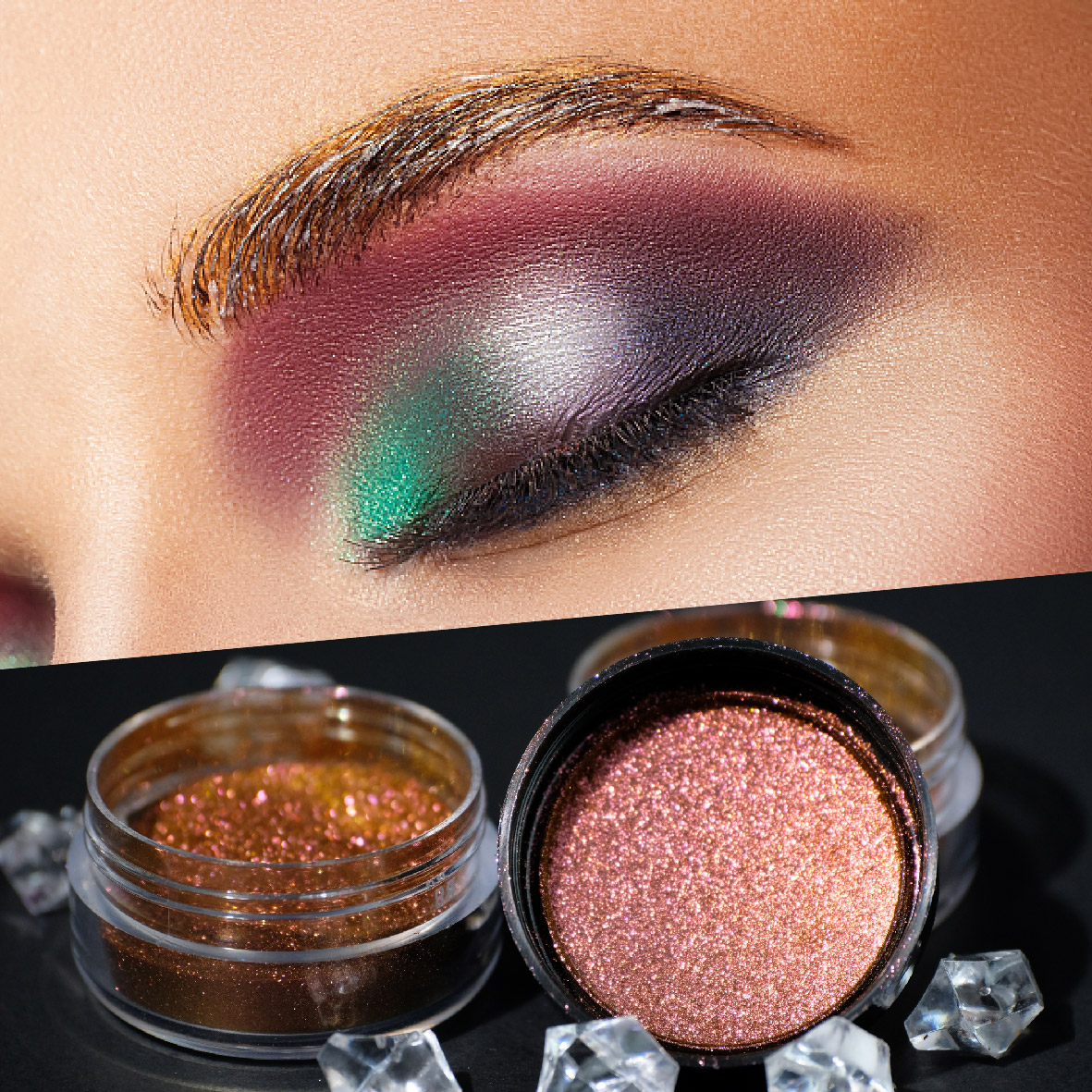 Cosmetic Grade Pearlescent Pigment RangeExplore cosmetic-grade pearlescent and mica pigment series, including TiO2-free and surface-treated options, for formulations requiring documented substrate and coating choices.View Product →
This is exactly the line our cosmetic grade range is built around: substrate and coating choices that are documented for each market, with lot-level impurity data rather than a general claim of purity.
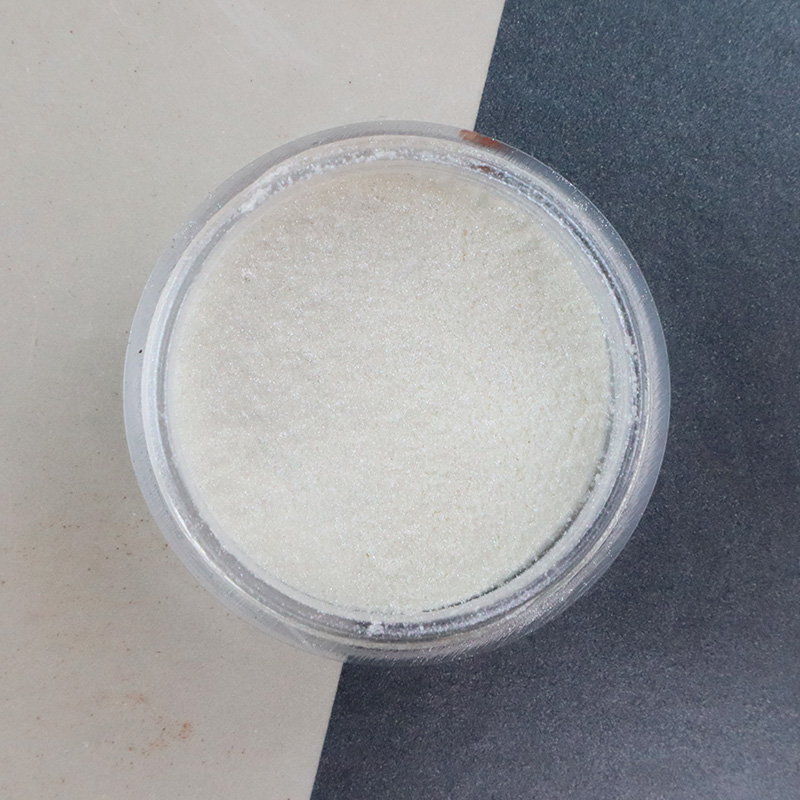 TiO2-Free Snow Velvet Silver-White Pearlescent PigmentA titanium dioxide-free pearlescent option for cosmetics and personal care, offered for custom supply; detailed specifications are to be updated, so inquire for current information.View Product →
Surface treatment deserves its own paragraph. A silicone or other coating improves dispersibility and skin feel, but it also changes the regulatory identity of the particle, so the treatment must appear in the ingredient declaration and be supported in the safety assessment. Formulators who switch treatments late in a project often discover this the hard way.
 Custom Surface-Treated Pearlescent Pigment RangeReview customizable cosmetic-grade pearlescent pigments with silicone, metal oxide, and polymer treatment options, plus multiple white and effect grades and particle sizes.View Product →
Two related traps are worth flagging. First, industrial grade and cosmetic grade are not interchangeable, even when the color index name is identical — the difference sits in impurity control and documentation. Second, effect materials such as glitter based on PET face regulatory scrutiny in several markets, which is why non-PET alternatives have moved from novelty to default in some briefs.
The most efficient compliance strategy is to build a pigment dossier once and route it three ways. In our laboratory work with brands, the package that consistently satisfies all three authorities includes: a full composition statement down to coating layers, a specification with heavy metal limits and test methods, a batch certificate of analysis, a safety data sheet in the correct regulatory format, evidence of the colorant's listing status in each target market, and a statement on animal testing and impurities.
Where possible, align the batch you test with the batch you ship. Auditors and notified bodies increasingly compare the certificate of analysis against the retained sample, and a mismatch is far more damaging than a slower release. Ready-made cosmetic pigment documentation helps your regulatory team start from a known baseline rather than a blank page.
None of these frameworks is unreasonable on its own. The difficulty appears when the same shimmer is expected to satisfy all three at once. Treat the colorant list as the gate, the purity data as the key, and the paperwork as the thing that decides how fast you get through it — and the differences between Brussels, Washington and Beijing become a planning exercise rather than a surprise.

Contact Us
Mobile

 English
 Español