E-mail: [email protected]
Phone: +86-572-8356001
E-mail: [email protected]
Phone: +86-572-8356001
Content
A pearl effect looks like a colour question and behaves like a physics question. Behind every silver-white, interference blue or golden luster sits a thin film of titanium dioxide wrapped around a platelet substrate, and the light that comes back depends on two things: how thick that film is, and how densely, how orderly and in which crystal form it has crystallised. Calcination temperature governs both.
In this guide we walk through what happens to titania between roughly 300 °C and 900 °C, why anatase and rutile behave so differently inside a coating, and how that difference surfaces in gloss, interference colour and outdoor durability.
Two variables decide the optical output of a mica-based pearlescent pigment: the optical thickness of the TiO2 layer (geometric thickness multiplied by refractive index) and the quality of that layer. Calcination temperature manages both at once.
Too low, and the titania never fully crystallises — the layer stays partly amorphous and slightly porous, and the pigment reads chalky rather than lustrous. Too high, and the layer sinters, platelets can warp or crack, and interference colours drift away from the standard. In between sits the anatase-to-rutile transition, and where a producer chooses to sit relative to that transition is one of the most consequential decisions in the entire process.
Both phases are TiO2 with a tetragonal lattice, but the octahedra are stacked differently. Anatase shares edges and forms a more open structure; rutile shares corners and packs more tightly. That packing difference is why the two phases differ in density, hardness and — most importantly for us — refractive index.
| Property | Anatase | Rutile |
|---|---|---|
| Refractive index (approx.) | 2.5 | 2.7 |
| Density (g/cm³) | ~3.89 | ~4.23 |
| Band gap (eV) | ~3.2 | ~3.0 |
| Thermodynamic stability | Metastable | Stable phase |
| Photocatalytic tendency | Higher | Lower |
| Typical role in a pearl pigment | Lower-temperature processes, softer luster | Maximum luster, outdoor durability |
The refractive index gap between 2.5 and 2.7 sounds small, but reflectance at each interface scales with the ratio of indices, not their difference. Against a mica substrate at roughly 1.55 to 1.60, that extra 0.2 in the coating translates into measurably higher reflectance per unit thickness — which is why a well-crystallised rutile layer looks brighter and crisper than an anatase layer of identical coat weight.
The titania deposited on the substrate is not yet a crystal. It arrives as hydrous, largely amorphous Ti-OH species from the hydrolysis step. Somewhere around 300 °C to 500 °C, water and residual organics leave, and anatase nuclei begin to form. The layer is now crystalline but still relatively open and defect-rich, so gloss is modest and the coating is not yet dense.
Heat further and anatase starts converting to rutile through a nucleation-and-growth mechanism. In pigment films this usually happens somewhere between 600 °C and 900 °C, but the window is anything but fixed. It shifts with heating rate, soak time, atmosphere, crystallite size and — critically — additives. Dopants such as tin oxide, alumina or silica are commonly used to retard the transformation, letting a producer soak at a higher temperature long enough to densify the layer while still preserving the structural integrity of the substrate platelet. Nano-scale and thin-film titania tends to transform earlier than coarse bulk powder, so bulk-phase textbook numbers are only a starting point for a coated platelet.
Above the transformation, crystallites coarsen and the layer densifies. Up to a point this is exactly what you want: a smooth, compact, highly crystalline shell scatters less diffusely and delivers a sharper highlight. Push past the optimum and the benefits reverse — neighbouring particles sinter into necks, the platelet surface roughens, and gloss falls while colour drifts.
Our interference series is built directly around this thickness-to-index relationship, which is why each grade is specified by optical target rather than by TiO2 percentage alone.
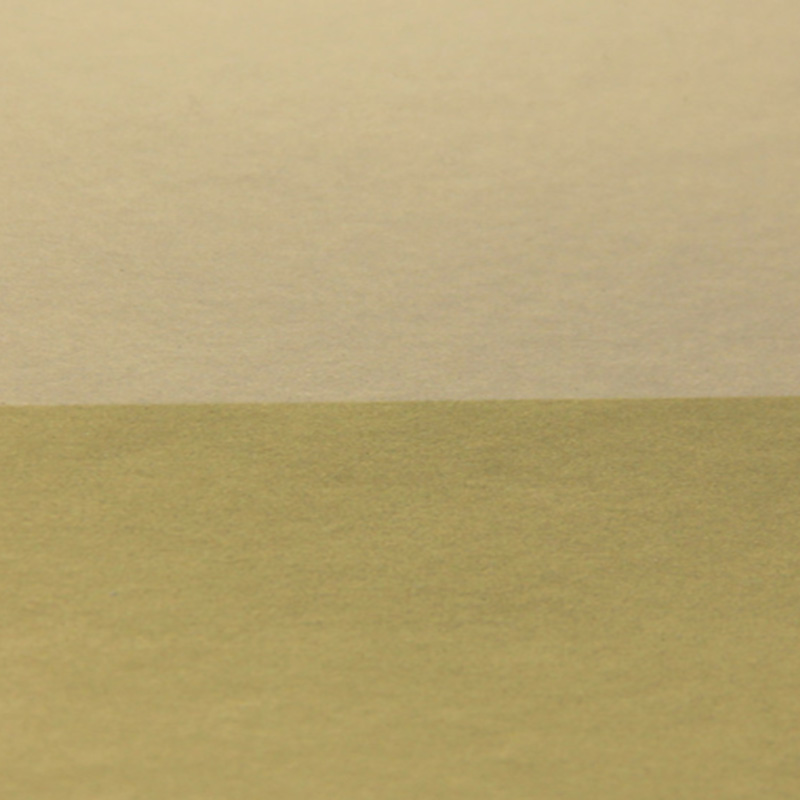 Rutile Interference Pearlescent Pigments by EffectRutile-based interference grades in Super, Satin, Glitter and Sparkle effects, organized by color and particle size for coatings where optical target and photostability matter.View Product →
Photostability is where crystal phase stops being an optical curiosity and becomes a warranty issue. Anatase is the more photochemically active polymorph; under UV it generates reactive species that attack the surrounding binder, producing chalking, gloss loss and colour fade in a pigmented film. Rutile is markedly less active, and in demanding industrial coating applications the combination of a rutile-rich coating plus an inorganic surface treatment is the standard route to multi-year exterior performance.
That is the reasoning behind our weather-resistant range: full conversion, dense crystallinity, and a passivation layer on top, so the optical function and the protective function are engineered separately but delivered together.
 RAYSUM Weather-Resistant Pearlescent Pigment SeriesWeather-resistant effect pigments with high-density technology, non-chrome treatment and a broad white, gold and chromatic range for durable industrial applications.View Product →
It would be easy to conclude that rutile always wins. It does not. Delicate substrates — synthetic mica, thin borosilicate platelets, very fine particle-size cuts — tolerate lower soak temperatures, and staying partly or wholly in the anatase region protects them from thermal damage. A slightly softer, lower-index luster is also a legitimate aesthetic in satin and skin-like finishes, where a mirror-bright highlight would look artificial. Lower firing temperatures save energy, too, which matters more each year.
The same physics governs cosmetic grades: a dense, highly crystalline shell is what allows a diamond-effect silver-white to deliver sparkle at low dosage without dulling the base formula.
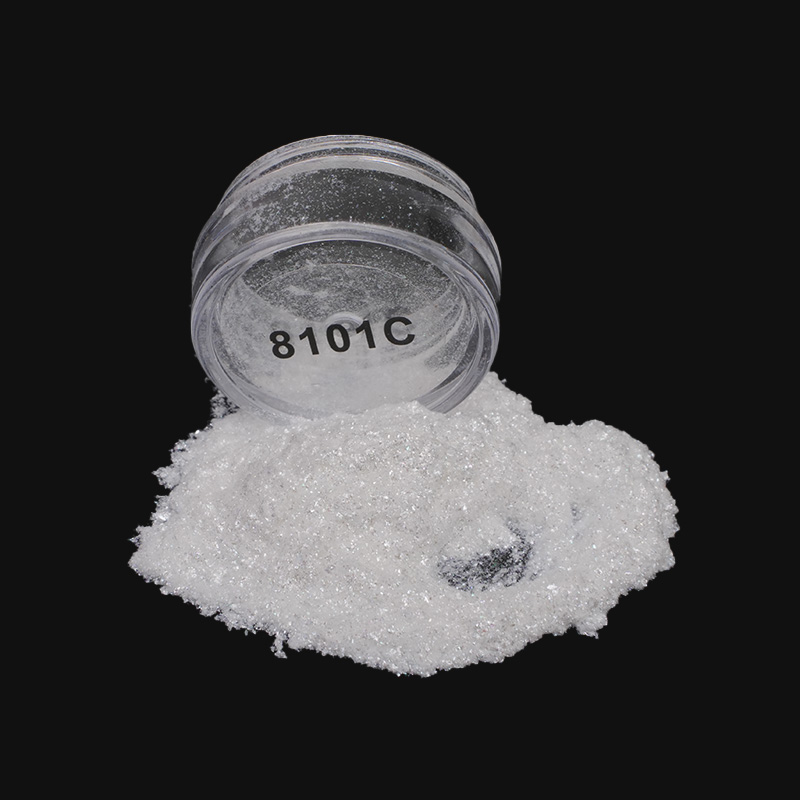 Diamond Silver White Cosmetic Pearlescent PigmentCosmetic-grade silver-white pigment with four diamond-luster grades, from ultra sparkle to brilliant white, across particle sizes up to 300 μm.View Product →
Anatase and rutile are the same material with different packing, and that difference becomes luster, colour travel and weathering resistance. Controlling calcination temperature is therefore not a housekeeping detail of pigment manufacturing; it is the step where optical design is either preserved or lost.
If you are specifying a pearl effect and want to understand what is happening inside the kiln before you commit to a grade, our R&D centre is happy to walk through the phase behaviour behind a specific colour target with you.

Contact Us
Mobile

 English
 Español