E-mail: [email protected]
Phone: +86-572-8356001
E-mail: [email protected]
Phone: +86-572-8356001
Content
Distributing pearlescent pigments looks simple from the outside: buy powder, hold stock, fill orders. In practice, the distributors who grow steadily are the ones who asked the right questions before the first purchase order was issued. Everything that happens later — how quickly you can answer a formulator's question, whether batch twelve looks like batch one, whether a container clears customs without a paperwork crisis — was quietly decided in that first conversation.
What follows is the checklist we hand to new distribution partners, in roughly the order the questions tend to come up. It is written for anyone preparing to represent a pigment manufacturer in a new market.
When you put your name on a drum, you lend your reputation to whoever filled it. So the first questions are not about pigments at all. Are you a manufacturer or a trading house? How many production lines do you run, and which steps are handled in-house? Is there a working R&D center and laboratory on site, or is quality checking outsourced?
These are not idle questions. Pearlescent pigments are made by coating a substrate — natural mica, synthetic mica, glass flakes — with metal oxide layers of precisely controlled thickness. Those layers determine the colour your customer sees. Whoever controls the coating process controls the consistency of your product; whoever buys from three anonymous factories can promise you nothing.
Ask for a factory visit or a live video walkthrough, and ask who your named technical contact will be. Vague answers are themselves an answer.
Pearlescent pigment is not one product. The same shimmering powder may be a cosmetic ingredient, a coating additive, or a plastic colorant, and the requirements differ sharply. Before discussing price, establish which grades the manufacturer produces and which ones they expect you to distribute.
For cosmetics and personal care, look for cosmetic-grade substrates, hygiene-controlled production, and the regulatory file a brand's safety assessor will request. A broad range usually runs from soft natural lustre through crystal and diamond effects, with colour-shifting chameleon pigments and titanium dioxide-free options now in strong demand.
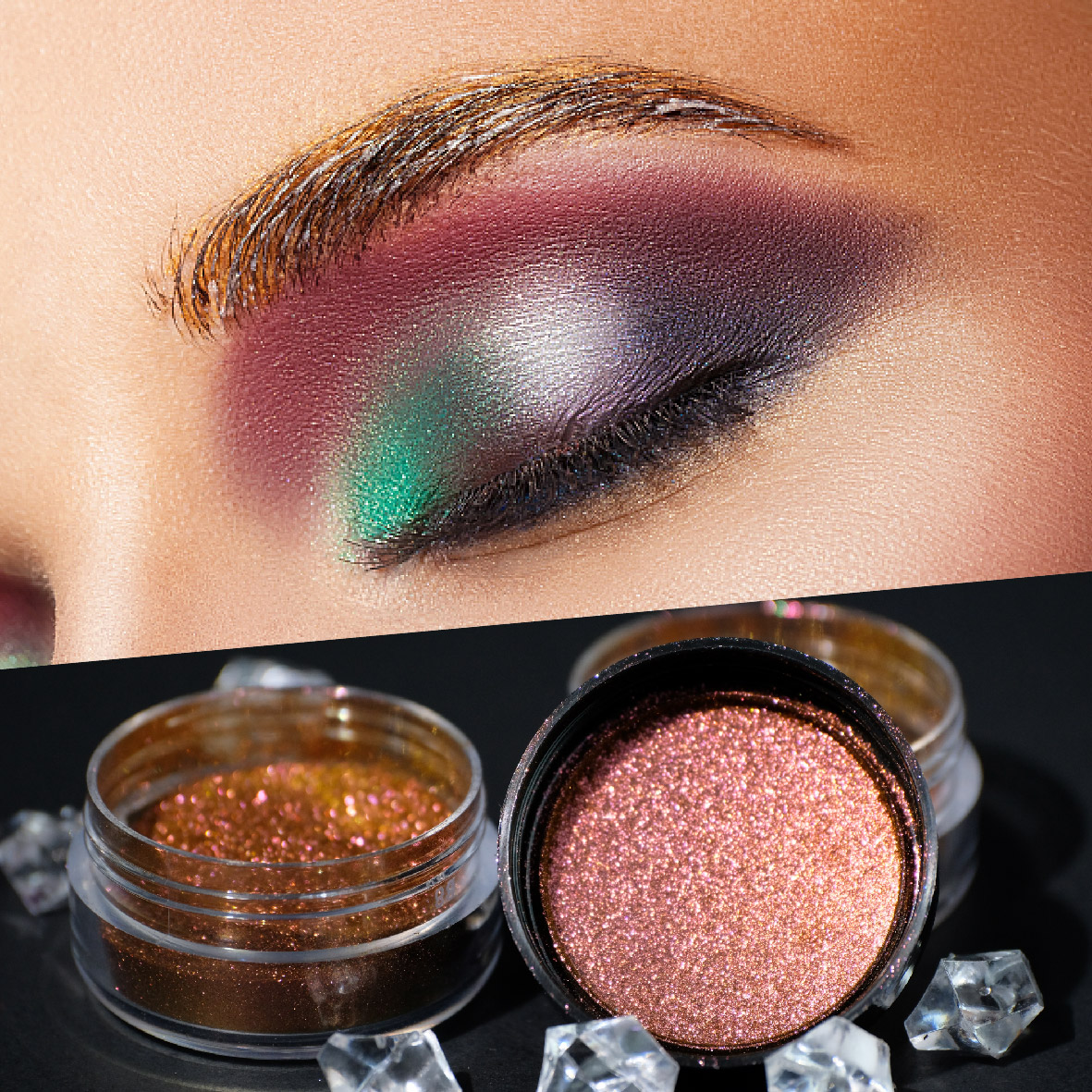 Cosmetic Grade Pearlescent Pigments for Personal Care FormulationsExplore cosmetic mica effect pigment series, including color-changing, crystal, diamond, TiO2-free and surface-treated options for beauty and personal care formulations.View Product →
For coatings, plastics, inks and packaging, priorities shift to dispersion behaviour, heat stability and cost per unit of effect. Ask which series are designed for solvent-borne systems and which for waterborne, and whether anti-yellowing or dispersion-optimised grades exist in the line.
 Industrial Grade Pearlescent Pigments for Coatings, Plastics and InksExplore over 2,000 synthetic mica-based pearl pigment options for inks, paints, coatings, plastics and other industrial uses, with customization available.View Product →
If you plan to serve several verticals, say so early — a manufacturer who knows your book of business can help with inventory planning and often offers better terms.
This is where new distributors get caught out. A customer places an order, then requests the safety data sheet, the batch certificate, the heavy-metal declaration and the REACH status — and you have three days to produce documents you have never seen.
Ask in writing what a standard document pack contains. At minimum you should expect:
Ask how quickly a fresh certificate can be issued, and who signs it. A manufacturer with a real laboratory answers in seconds. You can see the kind of documentation we hand our distributors on our downloads page and use it as a benchmark when comparing other suppliers.
Colour consistency is the quiet killer of distribution businesses. A customer approves a sample, orders a tonne, and finds the second delivery reads half a shade warmer under the same lighting. The complaint lands on your desk, not the factory's.
So ask how batch-to-batch variation is measured and what tolerance is guaranteed. Are retention samples kept, and for how long? Is there a documented procedure for investigating a colour claim? Can the same grade come from the same line eighteen months from now?
| Question | Why it matters | What a strong answer includes |
|---|---|---|
| How is colour measured? | Perception differs between people and lighting | Instrumental measurement with defined illuminants |
| What is the batch tolerance? | Determines whether your customer sees the same shade twice | A stated Delta E range and a retained standard |
| Are retention samples kept? | Lets both sides resolve a dispute with evidence | Retained samples per lot with a defined shelf life |
| How is particle size controlled? | Affects sparkle, coverage and dispersion | Documented sizing and sieving steps |
| How long is shelf life? | Shapes your warehouse planning and returns policy | Storage guidance plus re-test intervals |
None of these questions are hostile. Manufacturers who invest in process control enjoy them, because they are the fastest way to separate a producer from a repackager.
Once the technical picture is clear, the commercial conversation gets easier. Work through these points in order:
Be realistic about exclusivity. Most manufacturers will protect a territory in exchange for a defined annual volume, reviewed each year. If you are not ready for that commitment, ask instead for a right of first refusal on new products in your market — a lighter promise that still protects the work you invest in building demand.
The relationship that matters begins after delivery. Ask what technical support looks like in practice: can a formulator at the factory answer a dispersion question within a day? Will someone join a call with your customer's development team? Are application notes, starting formulations and training available for your sales staff?
For demanding sectors, ask for evidence rather than adjectives. Automotive coatings live or die on weathering results, and a serious supplier should share accelerated test data and field experience for the grades you intend to distribute.
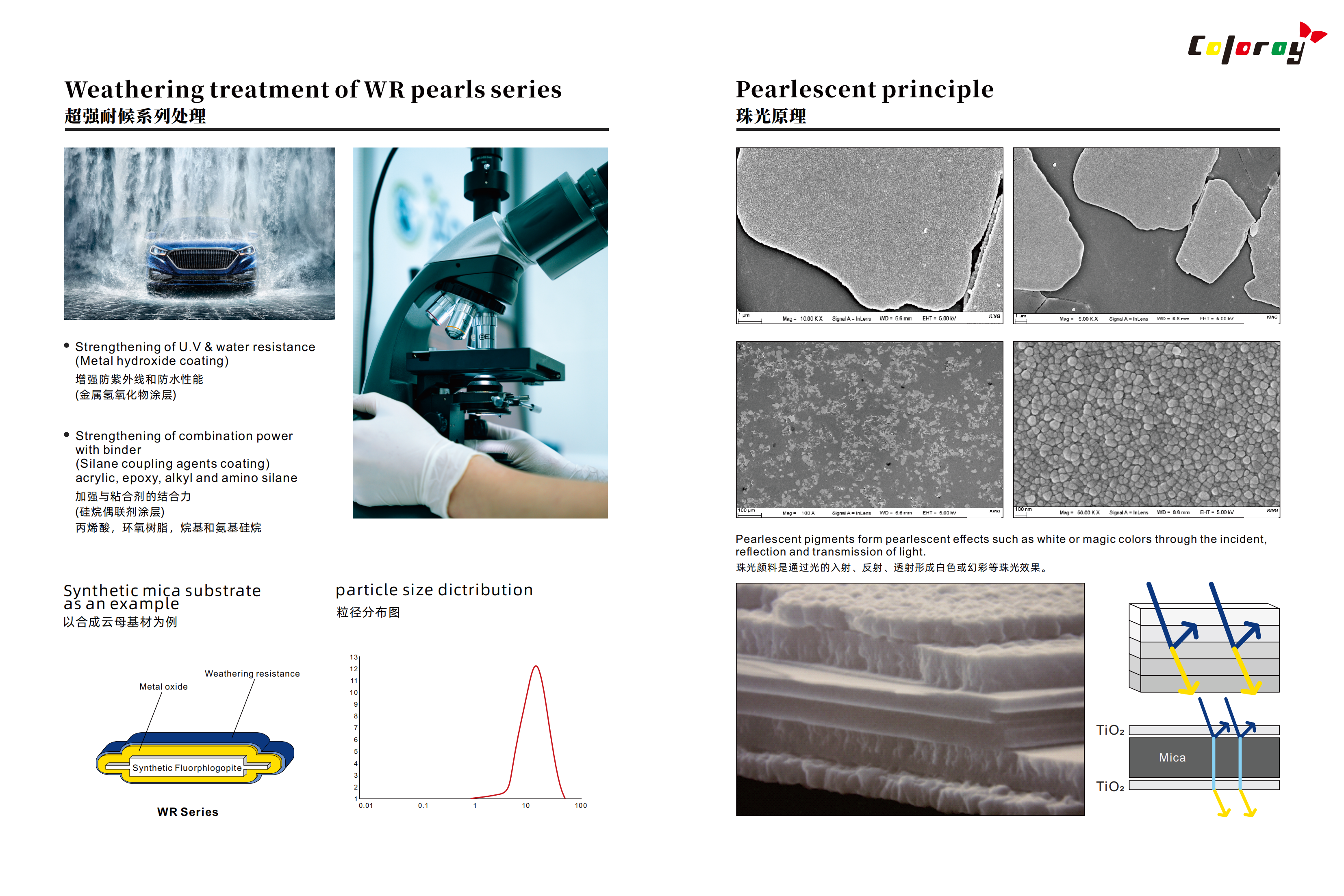 Weather Resistance Pearls Series for Automotive Coating ApplicationsReview the Weather Resistance Pearls Series for automotive coatings, then contact Coloray for product information and OEM/ODM support.View Product →
Ask how complaints are handled, too. A supplier who treats a technical claim as a shared investigation is worth more than one who is five per cent cheaper.
Becoming a pearlescent pigment distributor is less about signing a supply agreement than about deciding whose quality you are willing to put your name on. Ask the uncomfortable questions early — process control, documentation, tolerance, territory — and the answers will tell you quickly whether you are speaking to a manufacturer who will grow with you or a middleman who will fade when the market tightens.
The strongest partnerships we have seen began with a distributor who arrived with a list of questions and a clear plan for the market they wanted to build. That conversation is always welcome.

Contact Us
Mobile

 English
 Español